 Shadow
 The Countries Where the Milky Way Has Disappeared
Singapore's entire population lives under skies so bright the human eye cannot fully dark-adapt, while 80% of the world's population can no longer see the Milky Way.
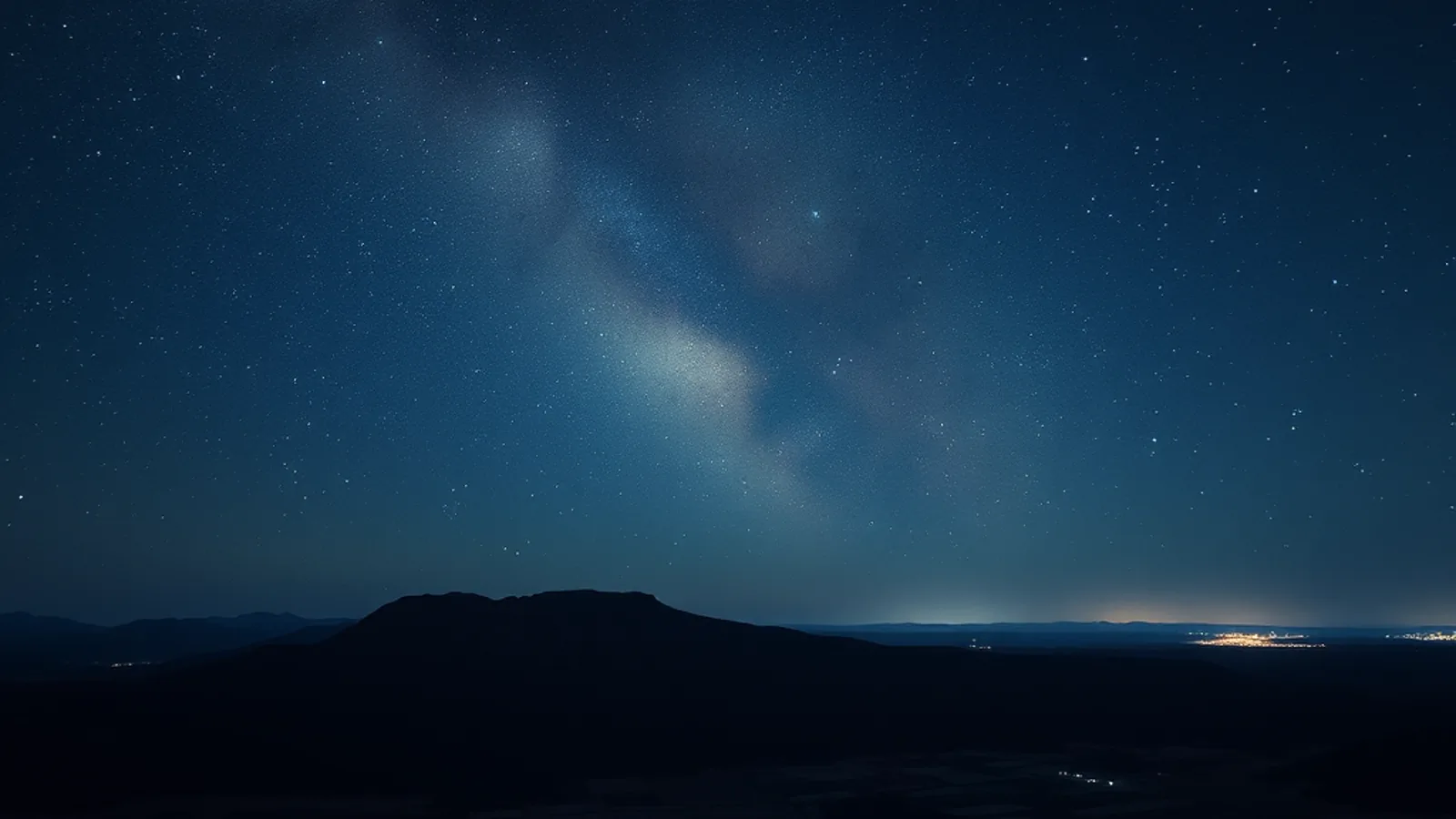
In some countries, the Milky Way has entirely vanished from the night sky due to extreme light pollution. Singapore stands out as a benchmark, where its entire population lives under skies so bright that the human eye can never fully adjust to night vision, a condition 4,000 times brighter than a natural, unpolluted night sky.
The Countries Where the Milky Way Has Disappeared
A natural night sky possesses a measurable brightness, distinct from a polluted one. World Population Review's radiance rankings, derived from NASA satellite data, highlight countries where artificial light has dramatically altered the night. These rankings indicate territories that appear more like perpetually lit stadiums than natural landscapes.
Small, densely populated countries dominate the top of this list, largely due to their limited undeveloped land where light could dissipate. The absence of rural areas means artificial light sources have an outsized impact on overall sky brightness.
The countries with the highest average radiance in the world include:
- Vatican City: Posts the highest average radiance globally.
- Monaco: Ranks second, a city-state with no rural land.
- Macau: Follows closely, another city-sized country.
- Bahrain: Exhibits radiance many times the global norm.
- Singapore: Rounds out the top five, with its entire population experiencing extreme brightness.
Singapore's situation is particularly notable; its artificial sky brightness is approximately 4,000 times the level of a natural, unpolluted night sky. This makes it a benchmark for extreme light pollution research.
Where the Milky Way is No Longer Visible
Beyond mere brightness, researchers also quantify the human impact by measuring how much of each country's population can no longer see the Milky Way overhead. This metric captures the direct loss of a fundamental natural phenomenon for residents.
Several countries report that 100% of their residents live in areas where the Milky Way is no longer visible from home. This means an entire generation in these regions may grow up without ever witnessing our galaxy from their own backyards.
Countries with the highest percentage of residents unable to see the Milky Way:
- San Marino: 100% of residents.
- Kuwait: 100% of residents.
- Qatar: 100% of residents.
- Malta: 100% of residents.
- United Arab Emirates: 99% of residents.
- Saudi Arabia: 97% of residents.
- Israel: 96% of residents.
Globally, approximately 80% of the world's population, including over 99% of Americans and Europeans, now lives under skies too bright to discern the Milky Way. This widespread loss underscores a significant shift in human experience and connection to the cosmos.
Accelerating Light Pollution Trends
The issue of light pollution is not static; it is intensifying even in already bright regions. Satellite data reveals a substantial increase in the Earth's artificially lit outdoor area, indicating a rapidly expanding problem.
Key trends in light pollution growth:
- Between 1992 and 2017, the artificially lit outdoor area of Earth grew by at least 49%.
- The true increase could be as high as 270%, partly because satellites struggle to accurately detect blue LED light, which is increasingly prevalent.
- Citizen-science observations of star visibility indicate that sky brightness is increasing by roughly 10% annually worldwide.
- At this rate, the problem of sky brightness would double in under eight years.
The transition from older sodium lighting to modern blue-wavelength LEDs in cities means that current satellite measurements may be undercounting the true scale of increasing light pollution, as their sensors are less sensitive to these specific wavelengths.
Ecological and Human Health Impacts
The consequences of losing a dark night sky extend far beyond the aesthetic loss of stargazing. Artificial light, particularly blue-wavelength light emitted by modern LED streetlights and screens, has profound biological effects on both humans and wildlife.
Impacts on human health:
- Blue-wavelength light suppresses melatonin, the sleep hormone, for twice as long as other wavelengths.
- It can shift human circadian rhythms by up to three hours.
- Chronic disruption of the circadian cycle has been linked to depression, cardiovascular disease, diabetes, and various metabolic disorders.
Wildlife also suffers significantly. Roughly 30% of vertebrates and over 60% of invertebrates are nocturnal, relying on natural darkness for navigation, hunting, and reproduction. Streetlights near shorelines, for instance, have been shown to disorient hatchling sea turtles, drawing them inland instead of towards the ocean. The pervasive artificial glow that obscures the stars is simultaneously reshaping the biology of the people and animals living beneath it.
Dark Skies as a Global Destination
In contrast to the growing problem of light pollution, some regions are capitalizing on their naturally dark skies, turning them into valuable assets for tourism and scientific research. These areas offer a glimpse into the pristine night sky that is increasingly rare globally.
Notable dark-sky destinations:
- Chile's Atacama Desert: Recognized as the world's premier dark-sky destination, attracting over 120,000 astro-tourists annually to observatories like ALMA and ESO.
- Namibia's NamibRand Nature Reserve: One of Africa's leading International Dark Sky Reserves, featuring eco-lodges designed for unobstructed night views.
- Niue: A tiny Pacific island nation that became the first entire country to be officially certified as an International Dark Sky Place in 2020.
- Central African Republic, South Sudan, and Chad: These countries post the lowest average radiance in World Population Review's rankings, with large stretches of land far from major electrical grids.
The global stargazing tourism market was valued at approximately $1.8 billion in 2025 and is projected to more than double by 2034. As light-polluted travelers increasingly seek out natural darkness, countries that have preserved their dark skies are finding new economic opportunities. What was once considered remote or overlooked is now becoming a sought-after attraction.
Key takeaways
- Vatican City, Monaco, and Macau exhibit the highest average radiance globally due to their dense, urbanized nature.
- Singapore is a benchmark for extreme light pollution, with its entire population living under skies 4,000 times brighter than natural night.
- 100% of residents in San Marino, Kuwait, Qatar, and Malta cannot see the Milky Way from home.
- Globally, 80% of the population, including over 99% of Americans and Europeans, can no longer see the Milky Way.
- Light pollution is accelerating, with Earth's lit outdoor area growing by at least 49% (potentially 270%) between 1992 and 2017, and sky brightness increasing by 10% annually.
- Artificial light disrupts human circadian rhythms and disorients nocturnal wildlife, impacting health and ecosystems.
- Dark skies have become a valuable asset, driving a stargazing tourism market valued at $1.8 billion in 2025, with destinations like Chile's Atacama Desert and Namibia's NamibRand Nature Reserve leading the way.
Disclaimer: This article provides general information based on World Population Review data and research. It is not intended as legal, financial, or tax advice.
Compare jurisdictions with TERRA AI
Statistics about where people live are only half the decision. If you are building an online business or choosing tax residency deliberately, TERRA AI compares Stacks by tax treatment, regulatory burden, sovereignty, and values — then connects you with licensed attorneys and advisors who execute.
This article is general information only and is not legal or tax advice. Consult a licensed professional in your jurisdiction before acting on residency, incorporation, or tax topics.