 Shadow
 Endemic Species Hotspots: Countries with Unique Wildlife
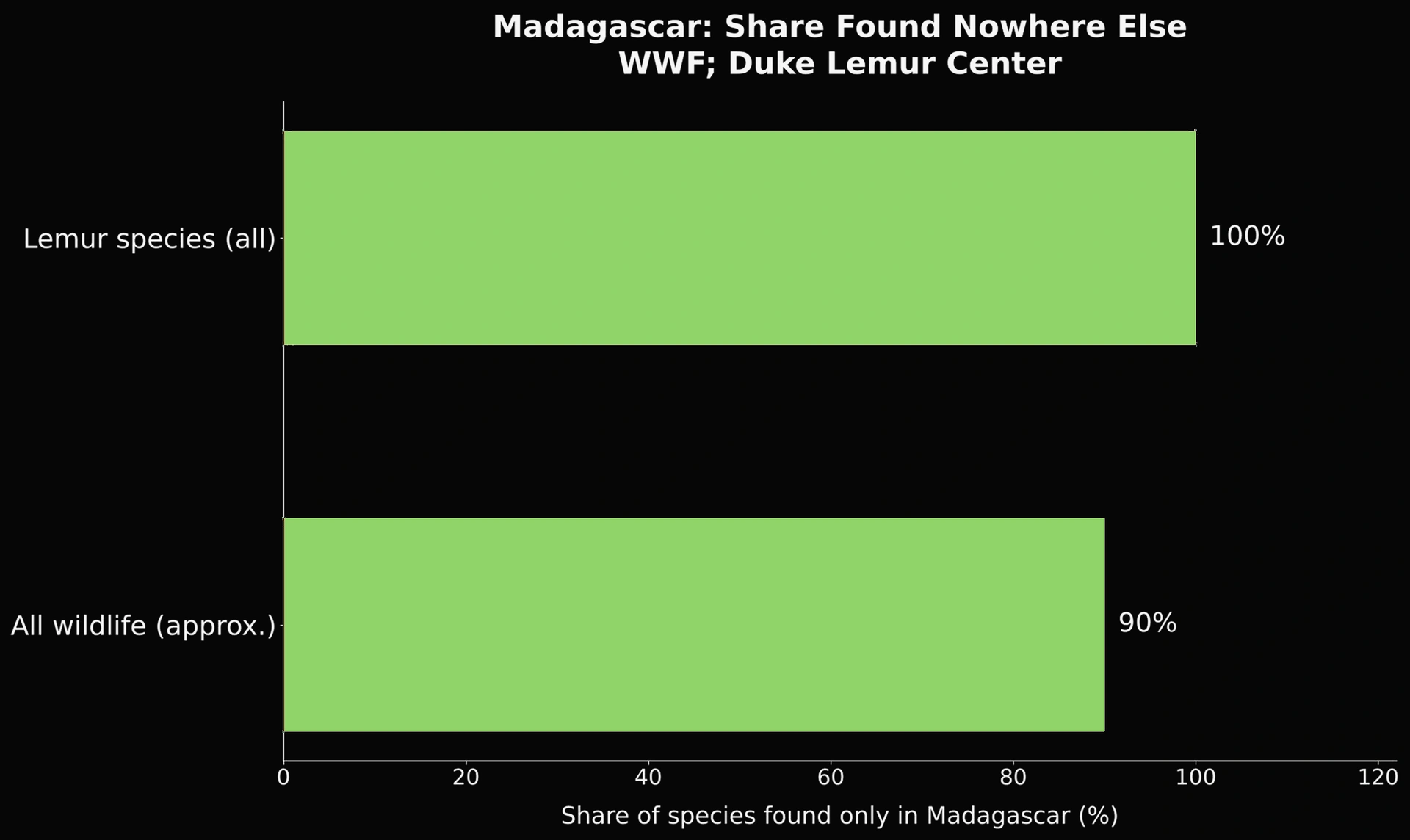
Madagascar leads the world in endemic species, with roughly 90% of its wildlife found nowhere else on Earth. Isolation on islands and continents drives this concentration of unique life.

Madagascar stands out globally for its concentration of endemic species, with roughly 90% of its wildlife existing nowhere else on Earth. This exceptional biodiversity is a direct result of geographical isolation, primarily on islands and continents separated by vast oceans, allowing species to evolve in unique ways.
Endemic Species Hotspots: A Global Overview
Life on Earth is not uniformly distributed. Specific regions, often characterized by long-term isolation, have become cradles for species found nowhere else. These endemic hotspots are typically islands, archipelagos, or continents that have been geographically separated for millions of years, allowing their flora and fauna to evolve independently.
This phenomenon results in a high concentration of unique animals and plants, making these areas critical for global biodiversity. The degree of endemism often correlates with an organism's mobility; species less capable of crossing open water or vast landmasses are more likely to be confined to a single location.
Madagascar: An Island of Unique Evolution
Madagascar, an island nation off the southeastern coast of Africa, exemplifies the impact of prolonged isolation. Having split from other landmasses millions of years ago, its wildlife has undergone an unparalleled evolutionary journey.
- Approximately 90% of Madagascar's wildlife species are endemic, meaning they are found exclusively on the island.
- All of the island's more than 100 lemur species are endemic, representing 100% endemism for this primate group.
- Conservation efforts continue to uncover new species; the WWF has documented around 600 newly described species on the island.
- Even Madagascar's top predator, the cat-like fossa, is unique to the island.
The stark difference in endemism rates between all wildlife and lemurs underscores the profound isolation that shaped Madagascar's primate evolution.
Australia's Continental Isolation
Australia, the largest landmass on this list, demonstrates the same pattern of endemism on a continental scale. Surrounded by oceans, its diverse ecosystems have fostered a high percentage of unique species across various taxa.
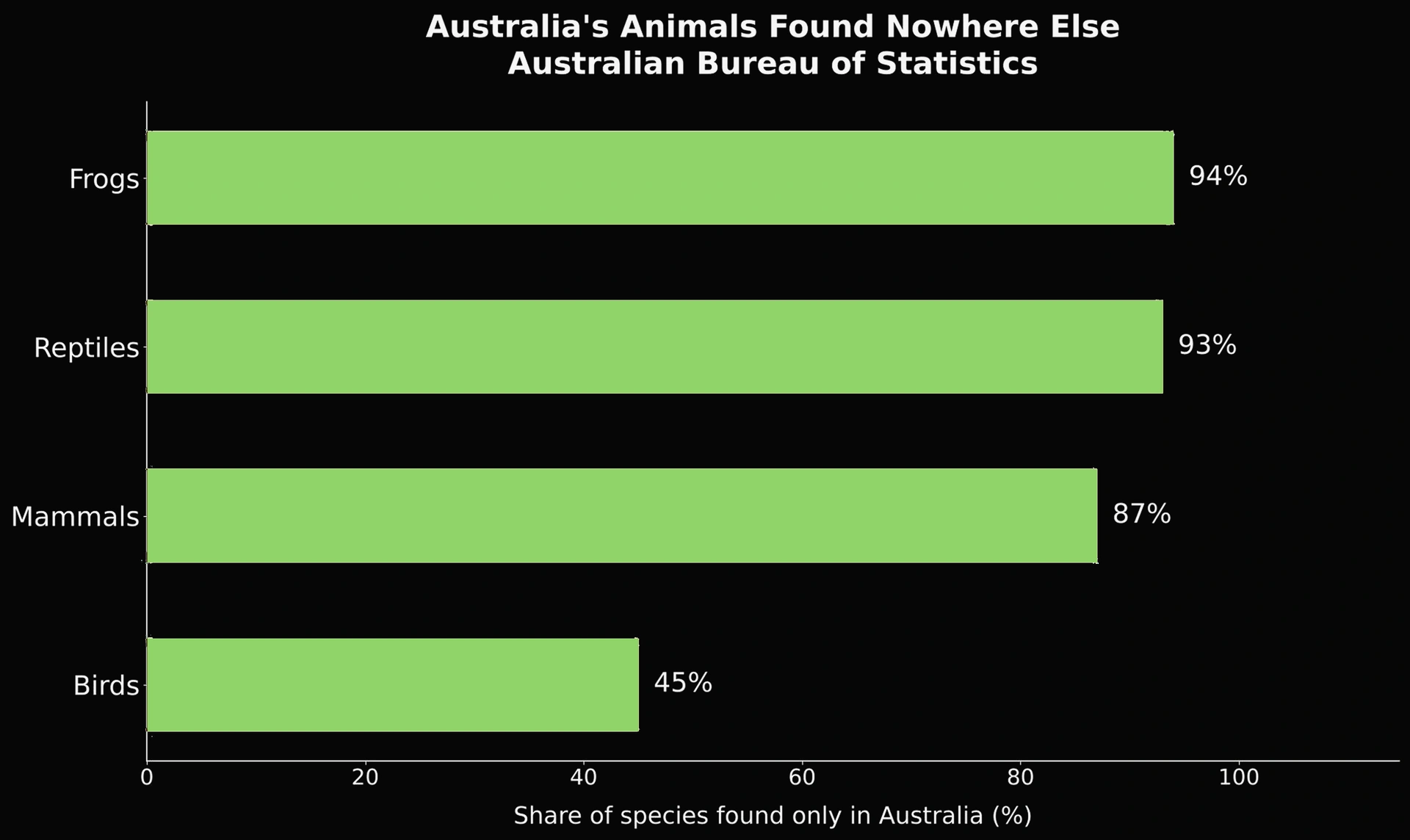
- About 94% of Australia's frogs are found nowhere else.
- Reptiles follow closely at 93% endemism.
- Mammals show an 87% endemism rate.
- Birds, due to their ability to fly across oceans, have a lower endemism rate of 45%.
- Australia's flowering plants are approximately 85% endemic.
The disparity between endemic birds and mammals highlights the role of mobility in species distribution. Animals unable to cross open water are far more likely to be confined to a single landmass.
The Philippines and Socotra: Island Sanctuaries
Smaller islands can also host extraordinary concentrations of unique life, often surpassing larger landmasses in specific categories. The Philippines and Socotra are prime examples.
The Philippines: Luzon's Mammal Diversity
Luzon, the largest island in the Philippines, is a critical hotspot for unique mammals. Researchers at the Field Museum have identified it as holding the world's greatest concentration of unique mammal species.
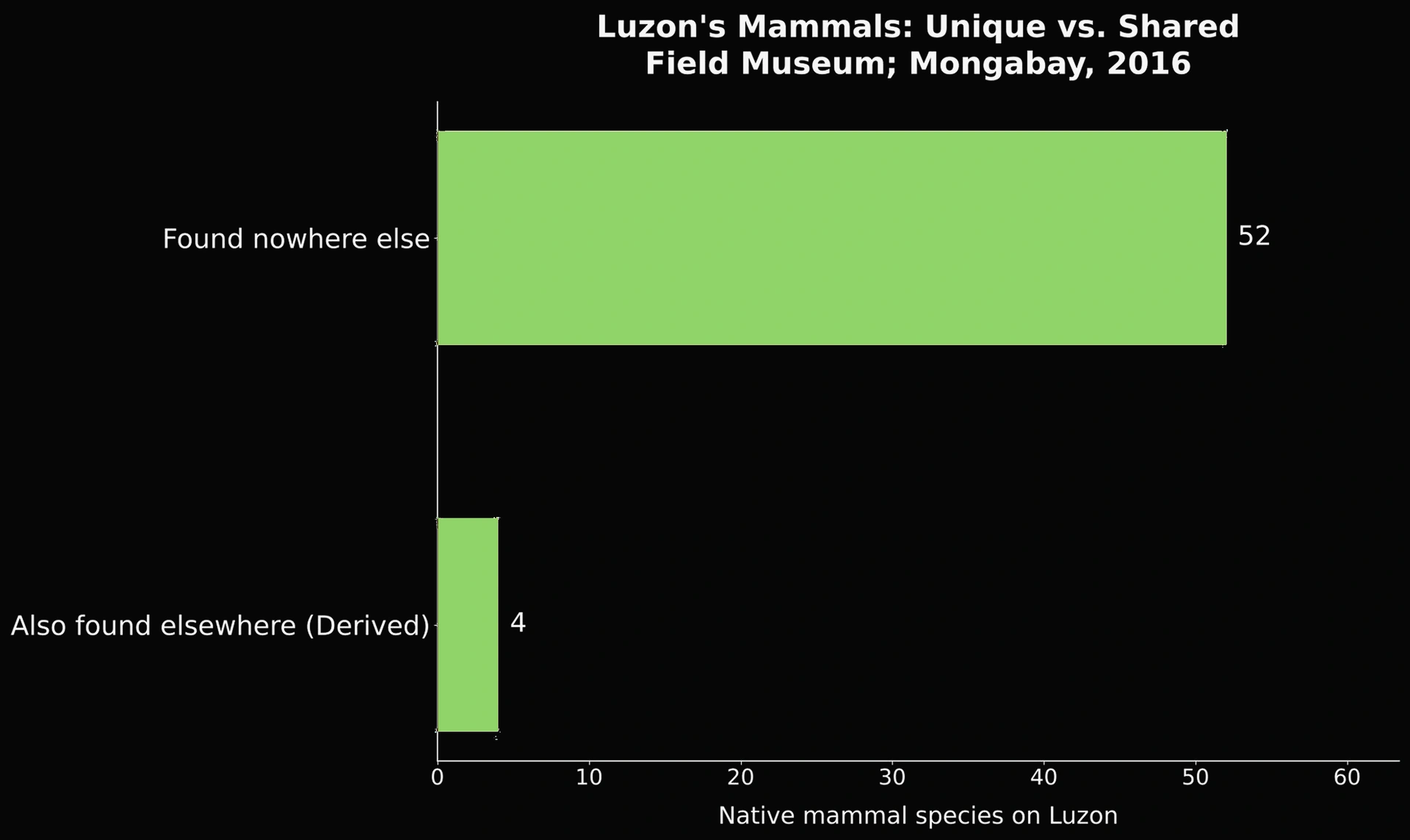
- Luzon is home to 56 native mammal species.
- Of these, 52 species, or approximately 93%, are found exclusively on the island.
- Only four native mammal species on Luzon exist outside its borders.
Socotra: The Alien Island of the Arabian Sea
The Socotra archipelago, located off the Horn of Africa and part of Yemen, is often referred to as the Galápagos of the Indian Ocean. Its extreme isolation has led to the evolution of bizarre and unique life forms.
- Approximately 37% of Socotra's plant species are endemic.
- About 90% of its reptile species are found only there.
- An astonishing 95% of its land snail species are endemic.
- The iconic dragon blood tree, with its distinctive umbrella-shaped crown, grows exclusively on Socotra.
The increasing endemism rates from plants to reptiles to snails illustrate how reduced mobility amplifies the likelihood of species being unique to an isolated island environment.
Galápagos and Hawaii: Laboratories of Life
No discussion of endemic hotspots is complete without the islands that profoundly influenced evolutionary theory. The Galápagos and Hawaiian Islands are classic examples of how extreme isolation fosters unique biodiversity.
Ecuador's Galápagos Islands
Situated approximately 1,000 kilometers off mainland Ecuador, the Galápagos Islands are renowned for their distinct wildlife.
- Reptiles and land mammals in the Galápagos are about 97% unique to the archipelago.
- Approximately 80% of its land birds are found nowhere else.
- The marine iguanas, the world's only sea-going lizards, are endemic to these islands.
The significant distance from the continent allowed species to evolve without competition, leading to high rates of endemism, particularly for less mobile creatures like reptiles.
The Hawaiian Islands
The Hawaiian Islands, located over 3,000 kilometers from the nearest continent, represent one of the most isolated archipelagos globally. This extreme isolation has made them a unique laboratory for plant evolution.
- About 90% of Hawaii's native flowering plants are found exclusively on these islands.
For plants, which are immobile once established, islands like Hawaii act as natural laboratories, allowing a few initial colonizers to diversify into numerous new forms. Hawaii's endemism rate for plants rivals or surpasses that of entire continents.
The Megadiverse Nations
Beyond individual hotspots, a select group of countries collectively harbors a disproportionate share of the planet's biodiversity. These "megadiverse" nations are critical for global conservation efforts.
- Seventeen countries are classified as megadiverse, including Australia, Brazil, Indonesia, Madagascar, and the Philippines.
- Despite representing fewer than one in ten of the world's nations, these 17 countries hold roughly 70% of the world's biodiversity.
- Indonesia, for instance, boasts islands like Sulawesi, which alone hosts 159 endemic bird species.
The concentration of irreplaceable life within this small club of nations means their conservation strategies have global implications. The overarching theme across all these hotspots is that isolation, rather than sheer size, is the primary driver of unique species evolution.
Key takeaways
- Geographical isolation, especially on islands, is the primary factor driving high rates of endemic species.
- Madagascar leads with approximately 90% of its wildlife found nowhere else, including 100% of its lemur species.
- Australia, a continent, shows high endemism for less mobile species like frogs (94%) and reptiles (93%), but lower for birds (45%).
- Luzon in the Philippines hosts the world's greatest concentration of unique mammals, with 93% of its native mammals being endemic.
- The Socotra archipelago (Yemen) exhibits extreme endemism, particularly for land snails (95%) and reptiles (90%).
- The Galápagos Islands (Ecuador) and Hawaiian Islands are crucial for unique reptiles (97%) and flowering plants (90%), respectively.
- Seventeen megadiverse countries collectively hold 70% of global biodiversity, underscoring their critical role in conservation.
This article provides general information and is not intended as legal, financial, or tax advice. Always consult with qualified professionals for specific guidance.
Compare jurisdictions with TERRA AI
Statistics about where people live are only half the decision. If you are building an online business or choosing tax residency deliberately, TERRA AI compares Stacks by tax treatment, regulatory burden, sovereignty, and values — then connects you with licensed attorneys and advisors who execute.
This article is general information only and is not legal or tax advice. Consult a licensed professional in your jurisdiction before acting on residency, incorporation, or tax topics.