 Shadow
 The Countries Producing the World's Honey and the Bees Behind It
Global honey production reached 2.0 million tonnes in 2024, with China alone producing 456,000 tonnes. Asia hosts nearly half of the world's 101.7 million bee colonies.
The global honey industry, largely unseen, produced approximately 2.0 million tonnes in 2024, with China leading by a significant margin. This complex sector involves tens of millions of bee colonies worldwide, yet faces challenges from regional declines and widespread product adulteration.
Global Honey Production Leaders
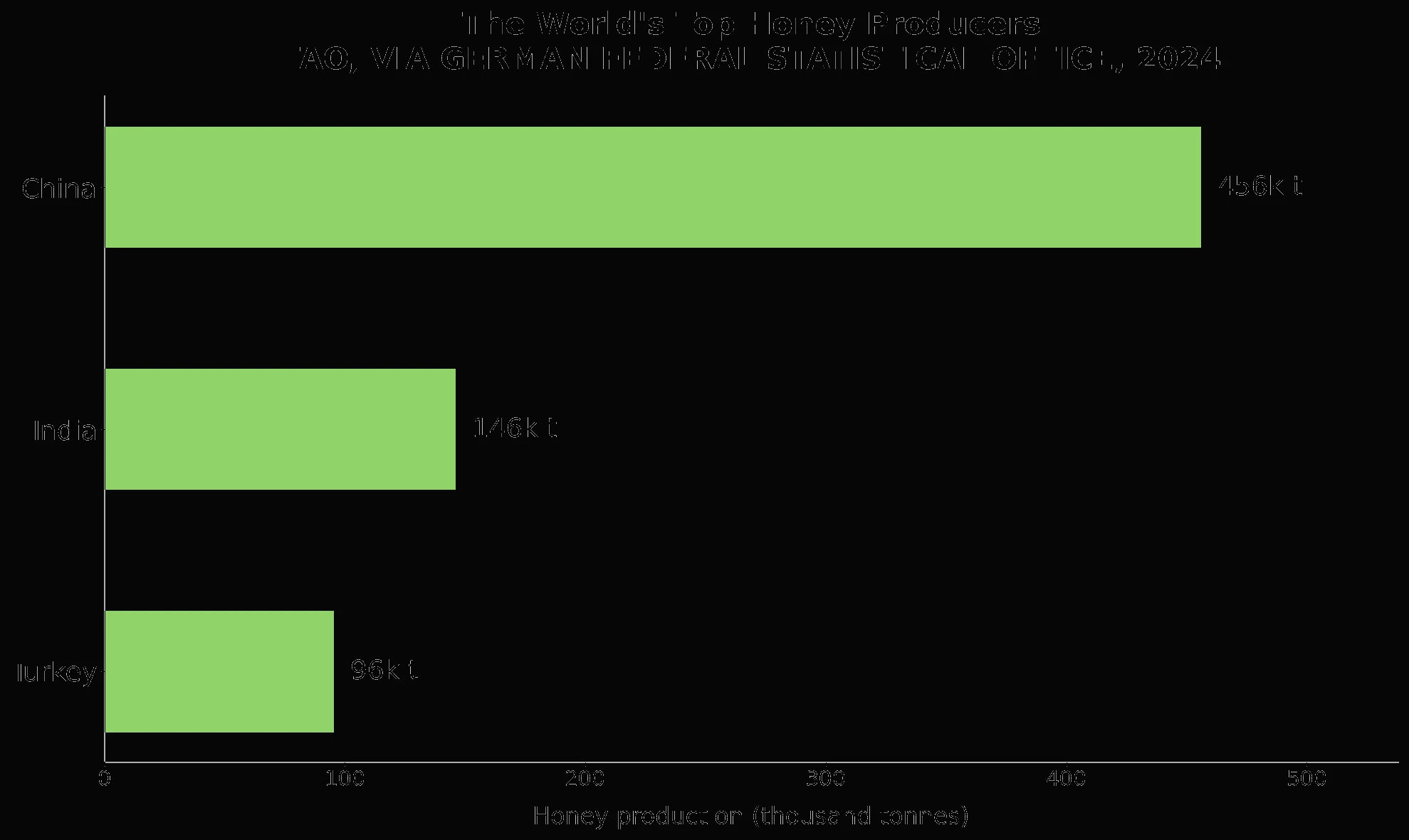
In 2024, global honey production reached an estimated 2.0 million tonnes. China emerged as the dominant producer, contributing 456,000 tonnes, which accounts for nearly a quarter of the world's total supply. This output significantly surpasses that of other major producers.
Following China, India ranked second with 146,000 tonnes, and Turkey secured the third position at 95,500 tonnes. China's production volume alone exceeds the combined output of India, Turkey, Iran, and Argentina.
Beyond its production, China is also the world's largest honey exporter, shipping approximately 187,000 tonnes annually.
| Rank | Country | Honey Production (Tonnes, 2024) |
|---|---|---|
| 1 | China | 456,000 |
| 2 | India | 146,000 |
| 3 | Turkey | 95,500 |
The World's Bee Colonies and Regional Growth
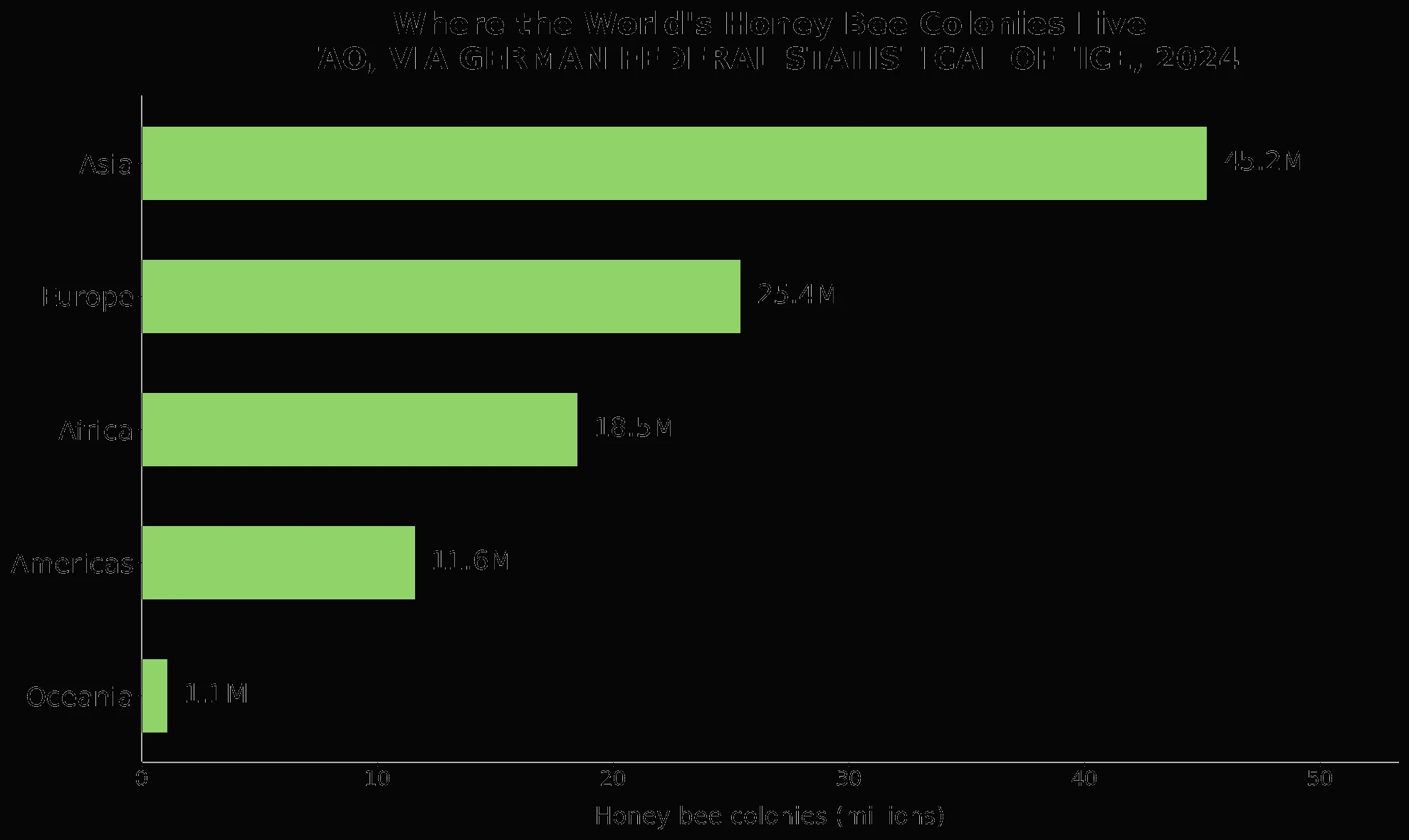
The global honey industry is underpinned by a vast network of bee colonies. In 2024, there were roughly 101.7 million honey bee colonies worldwide. Asia hosts the largest share, with 45.2 million colonies, nearly double any other region.
Europe followed with 25.4 million colonies, and Africa with 18.5 million. The Americas and Oceania trailed significantly, with 11.6 million and 1.1 million colonies, respectively.
Since 1990, the world's total colony count has grown by 47%. This growth has been particularly strong in specific Asian regions:
- Western Asia's colonies more than tripled.
- Southeast Asia's colonies more than doubled.
Conversely, Eastern Europe is the only region where colony numbers have declined, falling by almost 24% since 1990.
The Rise of African Honey Production
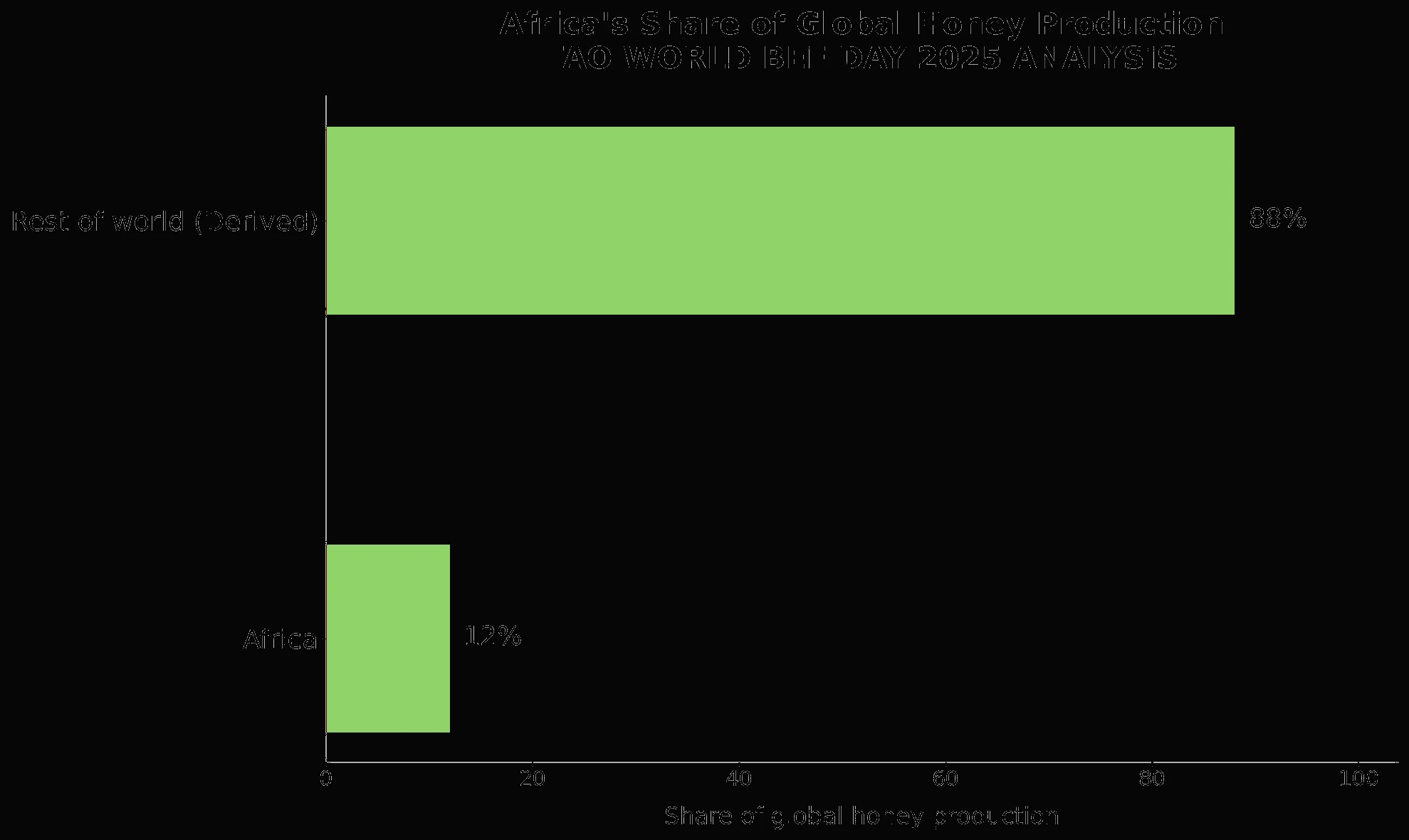
While Asia dominates in colony count, Africa is rapidly emerging as a significant player in global honey production. The continent now accounts for 12% of the world's honey supply, producing approximately 223,000 tonnes annually, and has recorded the fastest regional growth rate in recent analyses.
Ethiopia stands out as Africa's largest producer and ranks among the top ten honey-producing countries globally. Other notable African honey producers include:
- Algeria
- Angola
- Cameroon
- Kenya
- Morocco
- Rwanda
- Tanzania
Africa's colony count grew by 38% between 1990 and 2024, a rate surpassed only by Asia, indicating a strong upward trend in the continent's beekeeping sector.
The Problem of Adulterated Honey
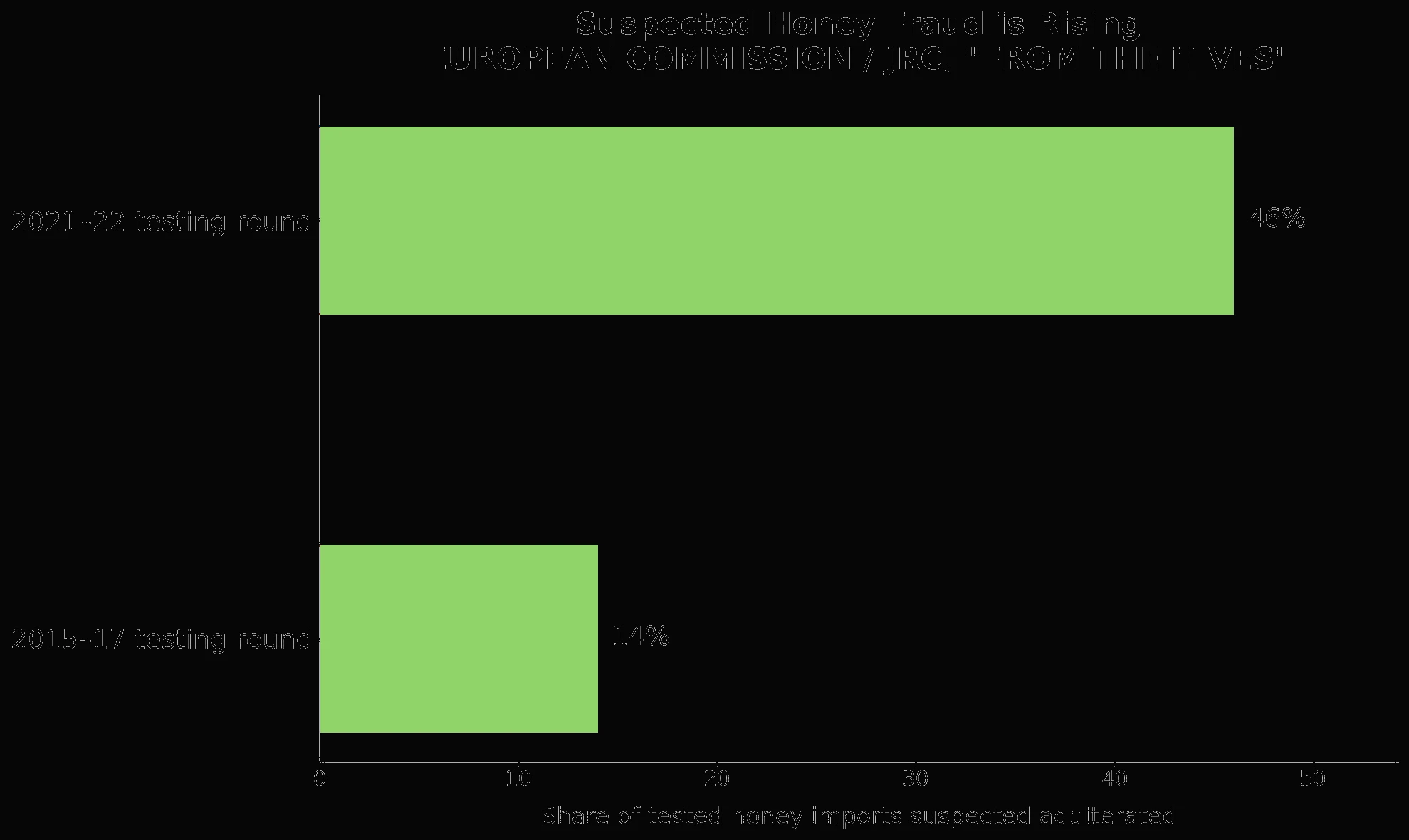
A significant challenge facing the honey industry is the widespread issue of adulteration. The European Commission's "From the Hives" investigation, which tested 320 honey shipments imported from 20 countries between late 2021 and early 2022, revealed concerning statistics.
Of the samples tested, 147 — a substantial 46% — were flagged as suspected of being adulterated with cheaper sugar syrups, often derived from rice, wheat, or sugar beet. This suspicion rate nearly tripled the 14% found in the previous EU-wide testing round conducted in 2015–17, though improved detection methods may account for some of the increase.
A particularly stark finding was that honey imported through the United Kingdom had a 100% suspicion rate, suggesting it had been produced elsewhere and merely re-exported.
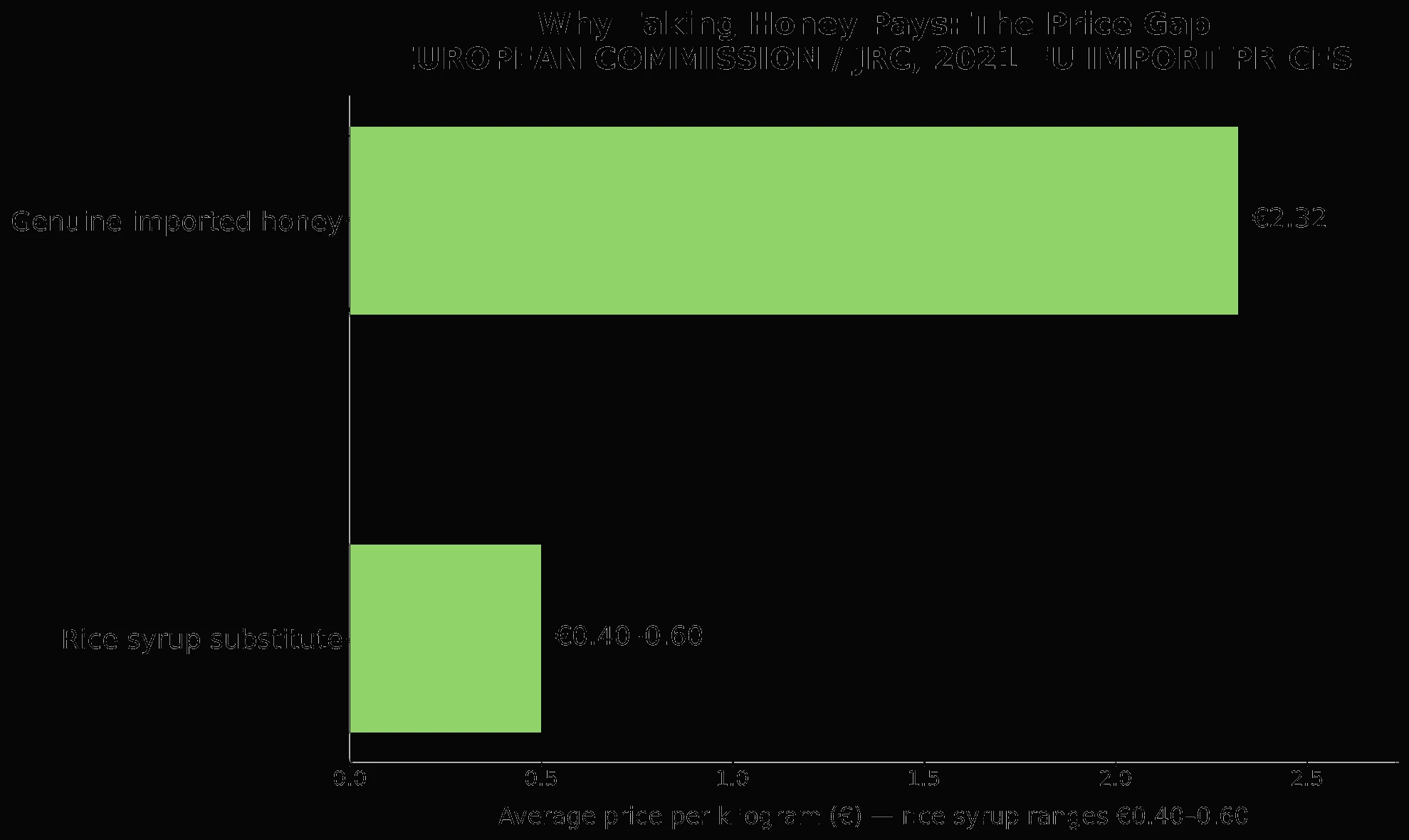
The economic incentive for fraud is clear: genuine honey imported into the EU cost an average of €2.32 per kilogram in 2021, while rice syrup, a common substitute, cost as little as €0.40 to €0.60 per kilogram. This price disparity encourages fraudsters to dilute real honey, with investigators finding that 57% of 123 exporters checked had shipped at least one suspect consignment.
The True Economic Value of Bees
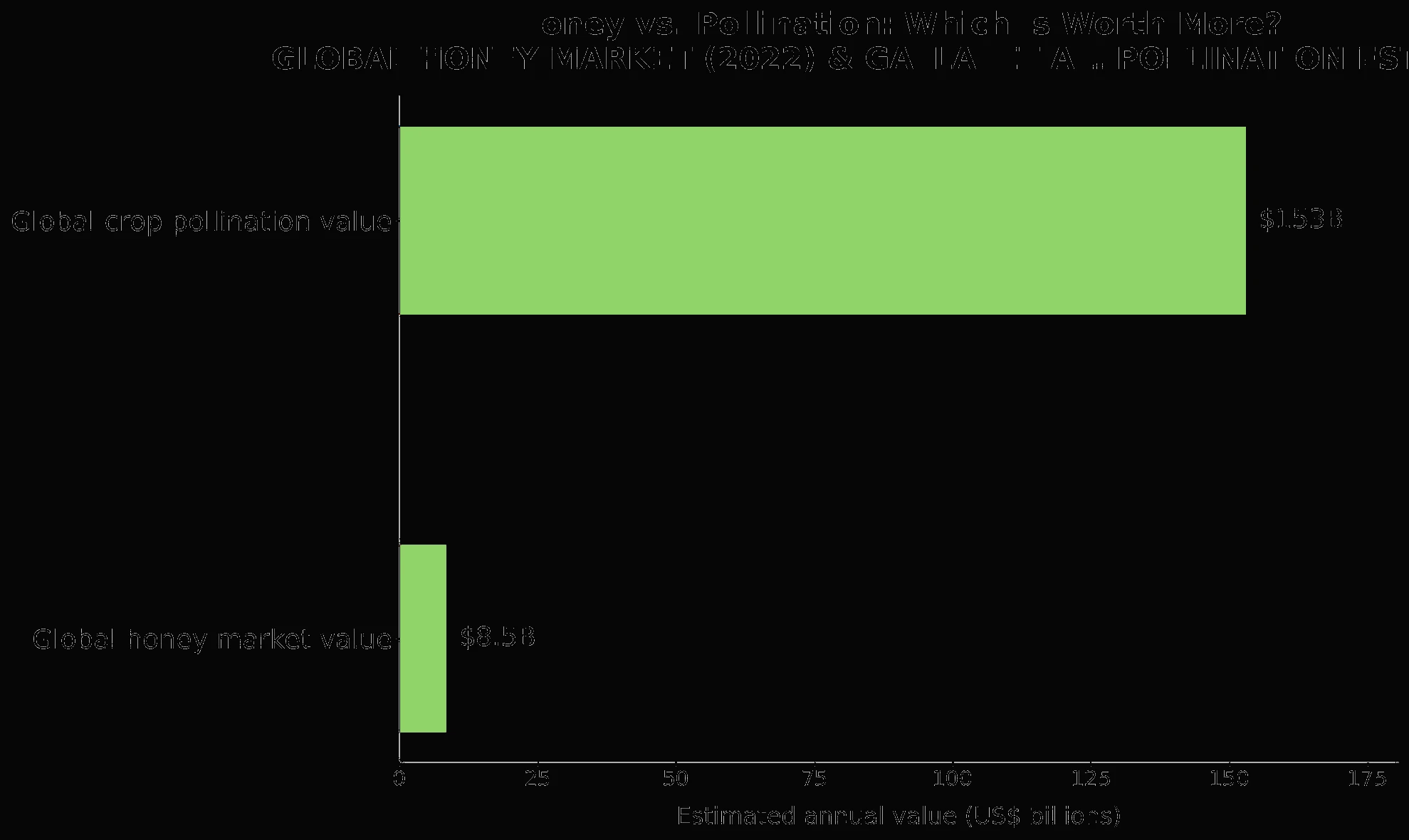
The economic contribution of bees extends far beyond honey production. While the global honey market was valued at $8.5 billion in 2022, the pollination services provided by honeybees to food crops are estimated at over $153 billion worldwide. This figure is nearly 20 times the value of the honey itself.
In the United States alone, honeybee pollination adds an estimated $15 billion annually to agricultural output, supporting more than 130 types of fruits, nuts, and vegetables. Economically, honey is often considered a byproduct; the primary value of a hive lies in the crops its bees pollinate.
Challenges in Beekeeping
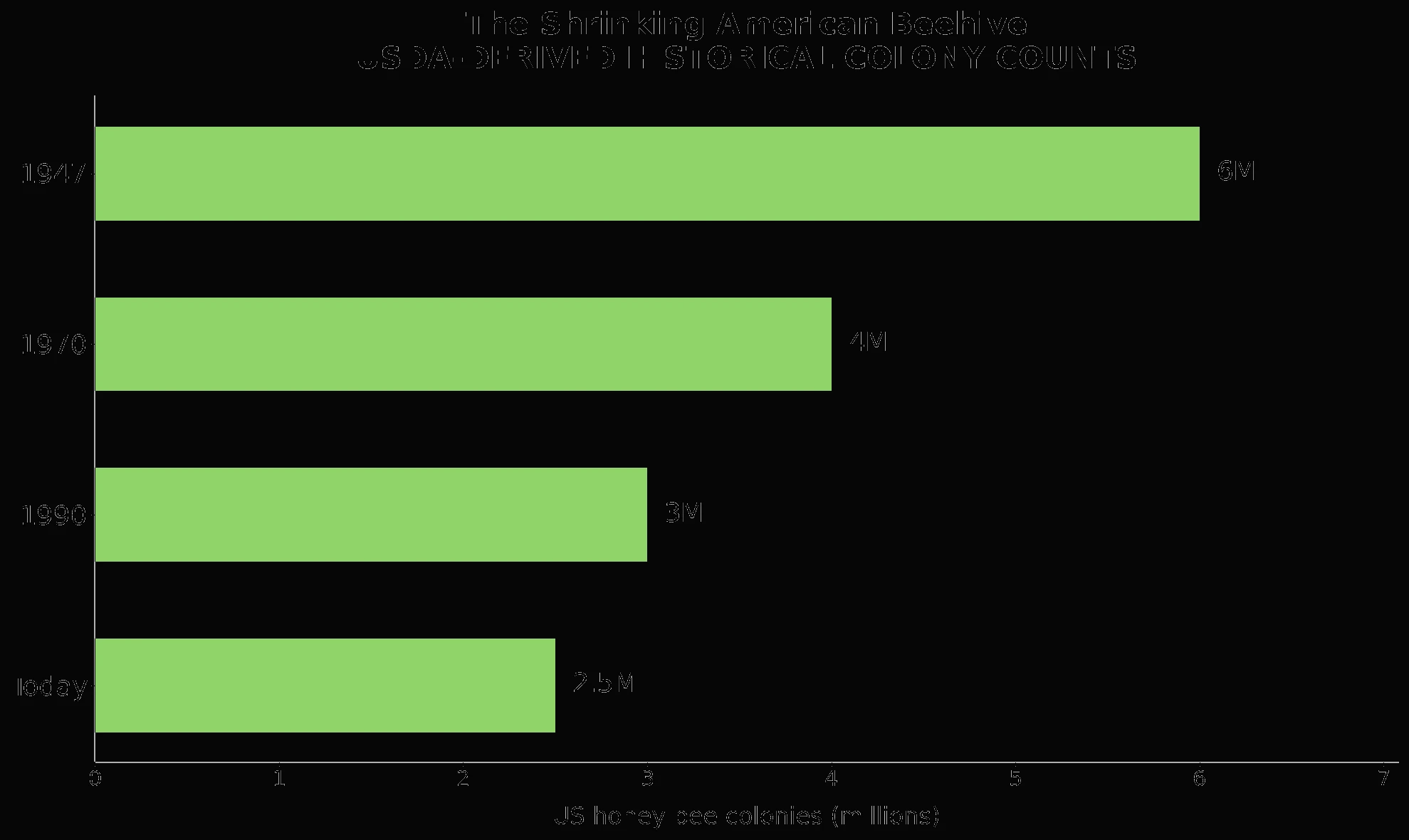
Despite the global growth in colony numbers, established beekeeping regions face significant challenges. In the United States, the number of honey bee colonies has declined from 6 million in 1947 to approximately 2.5 million today, even as demand for pollination services has risen.
US beekeepers reported losing 44.1% of their managed colonies in a single year, 2016, with summer losses surpassing winter losses for the first time on record. Replacing lost colonies is also becoming more expensive; the cost of renting bees to pollinate California's almond orchards increased from about $52 per colony in 2003 to more than $157 by 2009.
The global beekeeping system is expanding overall, yet some of its most established regions struggle with colony losses, highlighting a concentrated and vulnerable foundation for the world's honey supply and pollination services.
Key takeaways
- China dominates global honey production, contributing nearly a quarter of the world's 2.0 million tonnes in 2024.
- Global honey bee colony counts have grown by 47% since 1990, with Asia hosting nearly half of the 101.7 million colonies.
- Africa is the fastest-growing region for honey production, now accounting for 12% of the global supply and seeing a 38% increase in colony count.
- Honey adulteration is a significant issue, with 46% of EU honey imports suspected of being diluted with cheaper syrups, driven by a substantial price gap.
- The economic value of honeybee pollination ($153 billion globally) far outweighs the value of honey itself ($8.5 billion), making pollination the primary economic contribution of bees.
- Established regions like the United States face declining colony numbers and increasing costs for pollination services, despite global growth.
Disclaimer: This article provides general information based on World Population Review data and is not intended as financial, legal, or agricultural advice.
Compare jurisdictions with TERRA AI
Statistics about where people live are only half the decision. If you are building an online business or choosing tax residency deliberately, TERRA AI compares Stacks by tax treatment, regulatory burden, sovereignty, and values — then connects you with licensed attorneys and advisors who execute.
This article is general information only and is not legal or tax advice. Consult a licensed professional in your jurisdiction before acting on residency, incorporation, or tax topics.
Operator tools
-
 Frontier AI assistant
-
 Cheaper AI inference
-
 Tech-enabled US business banking
-
 Crypto rails and US business banking
Shadow Software may earn a commission when you sign up through these links.