 Shadow
 How Five Countries Host Half the World's International Students
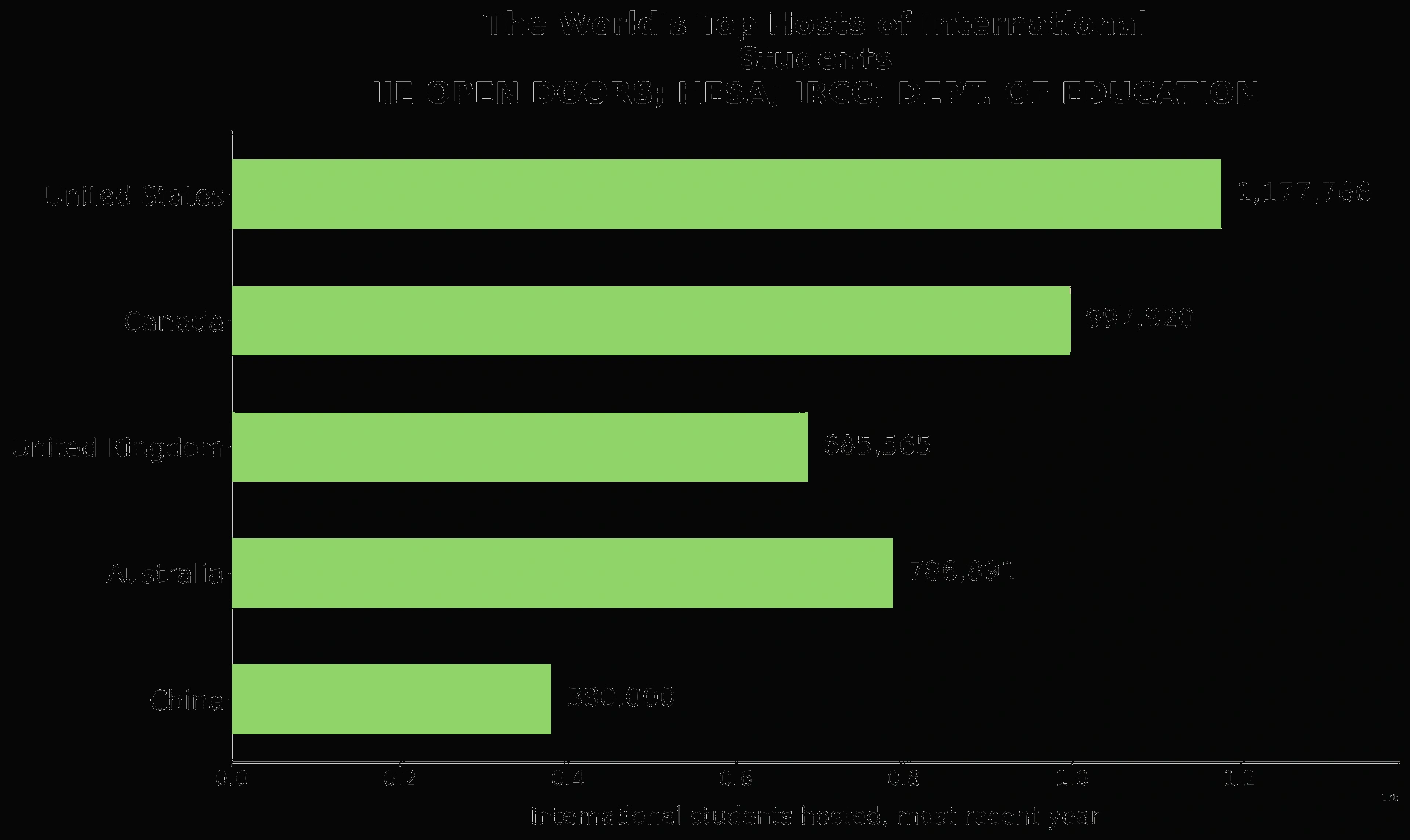
The United States hosted 1,177,766 international students in 2024/25, a 5% increase, marking its highest enrollment ever recorded. This trend is shifting as other nations adjust policies.
Nearly seven million students now pursue higher education outside their home countries, with a significant concentration in just a few nations. The United States leads this global trend, hosting 1,177,766 international students in the 2024/25 academic year, representing a 5% increase and its highest recorded enrollment.
How Five Countries Host Half the World's International Students
The landscape of international higher education is dynamic, with a handful of countries consistently attracting the majority of students. For decades, four English-speaking nations have absorbed most of this growth, though recent policy shifts indicate a move to moderate these numbers.
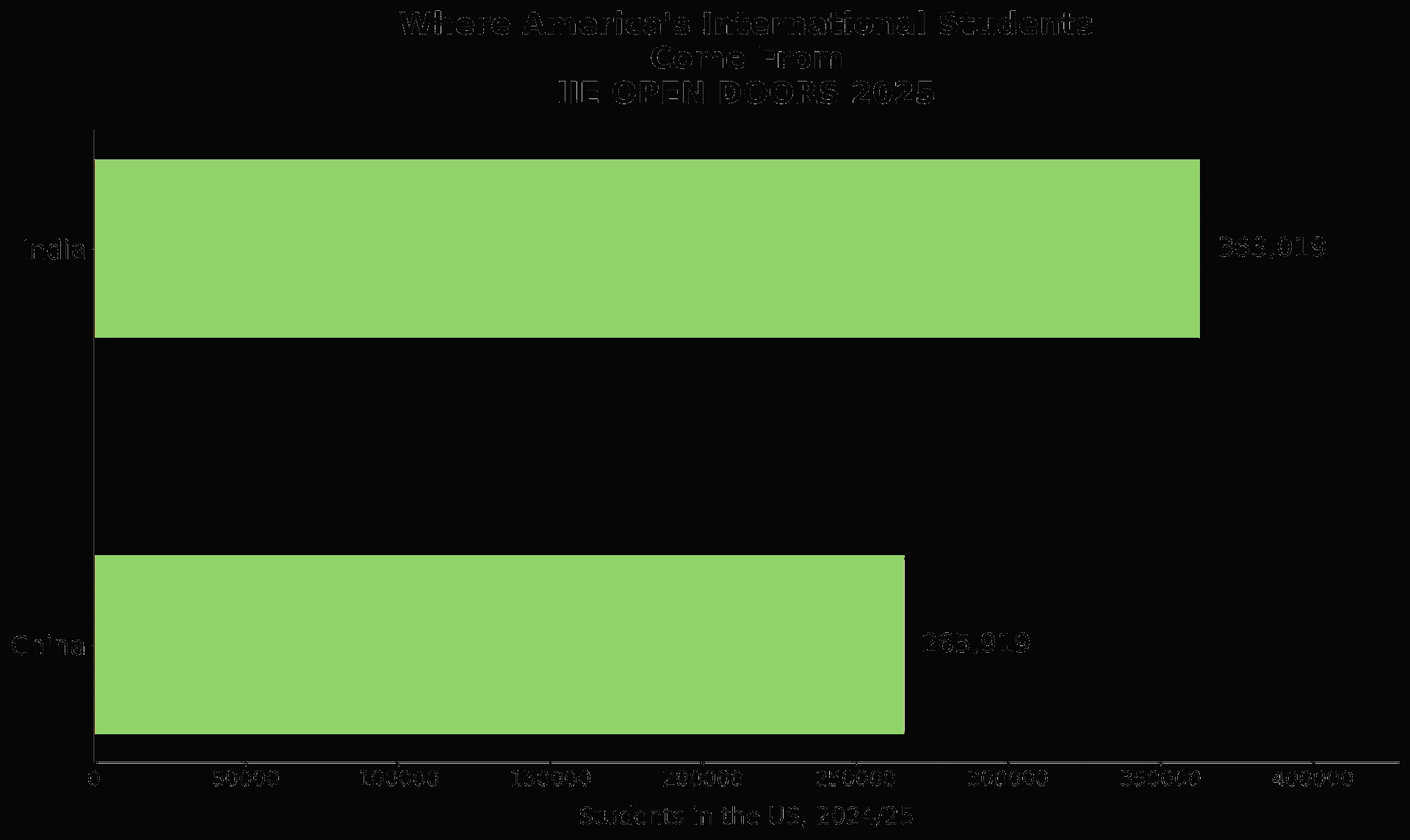
The United States remains the top destination, with its colleges and universities hosting a record 1,177,766 international students in the 2024/25 academic year. This 5% increase from the previous year marks the highest total since the Institute of International Education began tracking data in 1948. India has surpassed China as the leading source country, sending 363,019 students to the US, while China sent 265,919, a 4% decline.
International students now constitute 6% of the entire US higher education population and contributed nearly $55 billion to the economy in 2024, supporting over 355,000 jobs. However, early 2025/26 figures already show a 1% decline, suggesting this record enrollment may be a peak rather than a new normal.
Policy Shifts and Economic Stakes in Major Host Countries
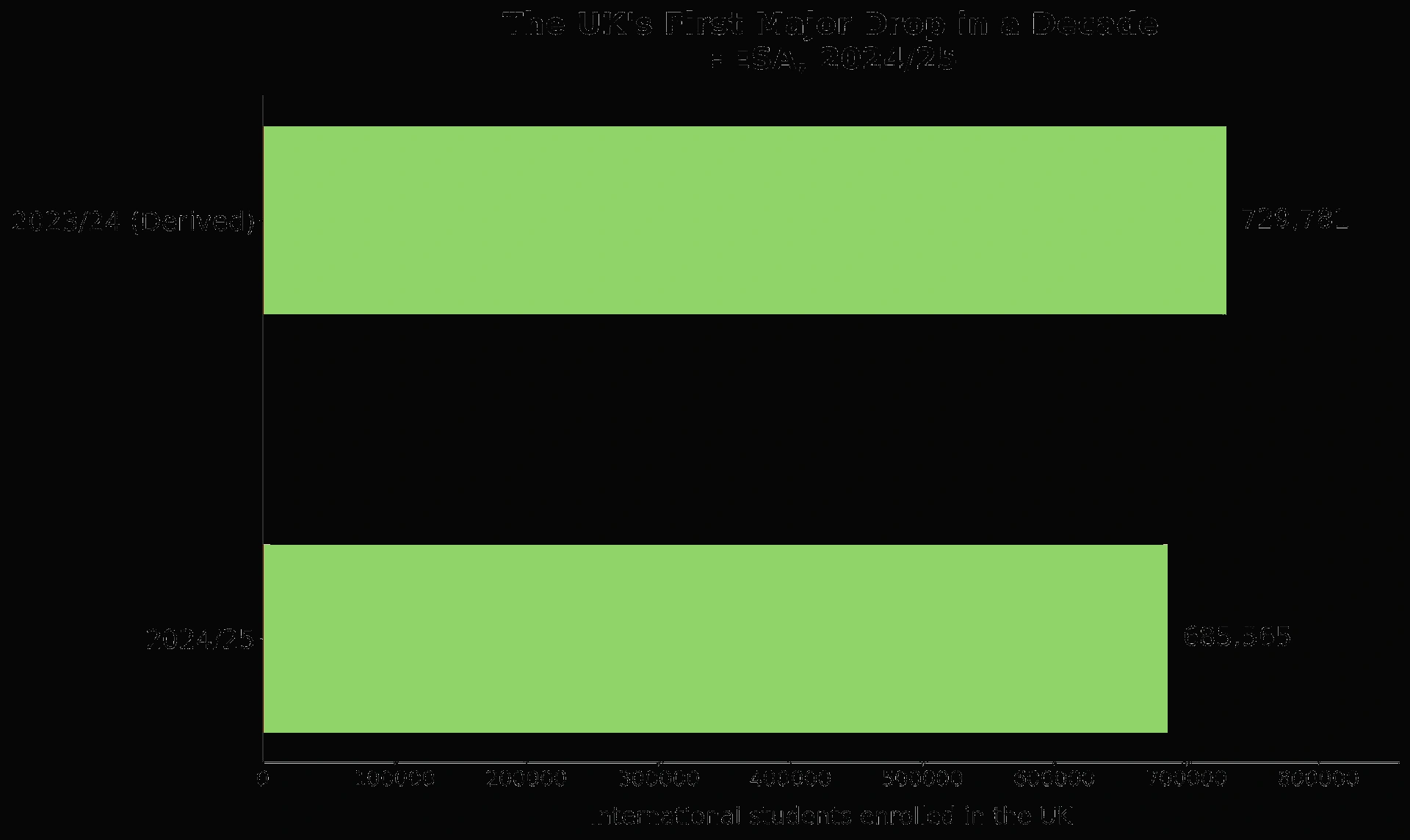
Across the Atlantic, the United Kingdom experienced a significant shift. It hosted 685,565 international students in 2024/25, a 6.1% decrease from the prior year. This marks the first meaningful drop after a decade of steady growth. New international entrants fell even further, down 5.4% to 404,555, following a policy change in January 2024 that restricted most international students from bringing dependents.
UK universities have become increasingly reliant on international tuition fees, which generated £12.4 billion in 2024/25, now accounting for 23% of their total income, up from just 5% in the mid-1990s. A sustained enrollment drop could significantly impact their core budgets.
Canada has implemented the most aggressive measures among major destinations. In 2024, Canada enrolled 997,820 international students, a 4.1% decrease from 1,040,985 the year before. This followed the government's introduction of a hard cap on new study permits, targeting a 35% reduction in vocational and undergraduate programs, with provincial limits based on population.
Approval rates for new study permits dropped to just 30% through mid-2025, compared with 51% over the same period the previous year. Canada is unique among major destinations for imposing a true hard cap, whereas the UK and Australia have relied on visa and dependent restrictions.
Australia's Unique Position and Policy Challenges
While Australia hosts fewer international students in absolute terms compared to the US, UK, or Canada, it holds the highest ratio of international students per capita globally. Enrollment reached 786,891 in 2023, a 27% increase from the previous year.
The Australian government attempted to slow this growth with a soft cap in 2025, but it was ultimately blocked in parliament. A replacement policy now prioritizes visa processing for institutions that have not yet reached 80% of their enrollment allocation, effectively managing growth without a hard numerical limit. Australia stands out as the only one of the major four where politicians directly overruled a proposed restriction.
The Five-Country Squeeze, Two Decades Apart
The concentration of international students in a few countries is a long-standing pattern. In 2000, approximately 1.6 million students studied abroad worldwide, with 70% of them concentrated in just five countries:
- United States: 28%
- United Kingdom: 14%
- Germany: 12%
- France: 8%
- Australia: 7%
By 2022, the total number of internationally mobile students had quadrupled to over 6.4 million. However, the concentration among a handful of countries had slightly loosened as new destinations emerged.
Germany and Canada boast the highest five-year graduate retention rates in the OECD, both at 52%. This means more than half of their international students remain in the country five years after their initial study permit. In contrast, Australia retains just 34% over the same period, and the United Kingdom retains only 7%, despite being a highly popular destination by raw enrollment.
While China is well-known for sending students abroad, it has quietly developed into a significant host country itself. China hosted 380,000 international students from 191 countries and regions during the 2024/25 academic year. With 3,167 universities as of 2025, China's higher education system rivals that of the United States in scale. Chinese universities have rapidly climbed global rankings while offering significantly lower costs than comparable programs in New York or London.
The gap between students' intentions to stay and their actual retention rates is notable. Over 70% of international students in Canada, 73% in the Netherlands, and 64% in Germany express a desire to stay and work after graduating. However, the gap between wanting to stay and actually staying is largest in the UK, where a majority of international students hoping to build a life there leave within five years.
Key takeaways
- The United States remains the top destination for international students, reaching a record 1,177,766 in 2024/25, though early data suggests a potential decline.
- The UK, Canada, and Australia have all implemented policies to curb international student growth, with Canada imposing a hard cap and the UK restricting dependents.
- International student tuition contributes significantly to host country economies, accounting for 23% of UK universities' income.
- Germany and Canada lead in international student retention, with 52% of students remaining after five years, while the UK retains only 7%.
- China is emerging as a major host country, attracting 380,000 international students with its expanding university system and lower costs, contrasting with restrictions in traditional Anglophone destinations.
Disclaimer: This article provides general information based on World Population Review data and is not intended as legal, financial, or immigration advice. Always consult with qualified professionals for specific guidance.
Compare jurisdictions with TERRA AI
Statistics about where people live are only half the decision. If you are building an online business or choosing tax residency deliberately, TERRA AI compares Stacks by tax treatment, regulatory burden, sovereignty, and values — then connects you with licensed attorneys and advisors who execute.
This article is general information only and is not legal or tax advice. Consult a licensed professional in your jurisdiction before acting on residency, incorporation, or tax topics.