 Shadow
 The Nations Facing the Most Cyberattacks
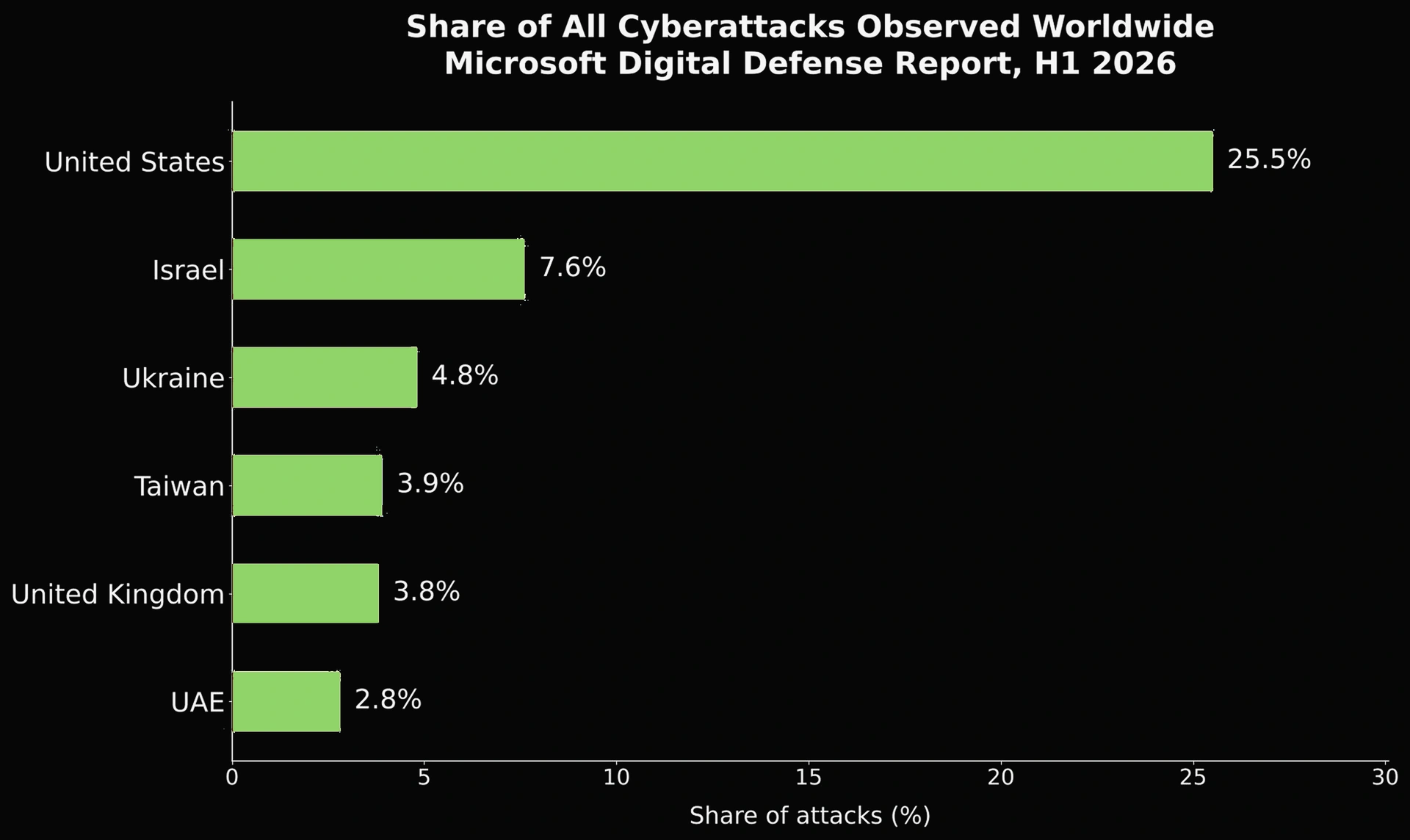
The United States absorbed 25.5% of all observed cyberattacks in the first half of 2026, making it the most targeted nation globally, with costs reaching $10.22 million per data breach.
The United States stands as the primary target in the global digital conflict, absorbing 25.5% of all observed cyberattacks worldwide in the first half of 2026. This significant share highlights the uneven distribution of digital threats, with a few nations bearing the brunt of an escalating number of sophisticated attacks.
Global Cyberattack Distribution
Digital defense reports from the first half of 2026 reveal a concentrated pattern of cyberattack targets. The United States experienced the largest share of attacks observed globally, underscoring its position as a primary digital battleground.
Microsoft's analysis shows the United States absorbed 25.5% of all attacks worldwide. Israel followed with 7.6%, then Ukraine at 4.8%. Taiwan (3.9%) and the United Kingdom (3.8%) completed the top five most targeted nations. The UAE, India, Japan, Canada, and Germany also ranked among the top ten.
A notable detail is Israel's position, facing nearly a third as many attacks as the entire United States despite a significantly smaller population. This suggests that geopolitical factors and regional conflicts play a substantial role in shaping a nation's cyber threat profile.
The Ransomware Landscape
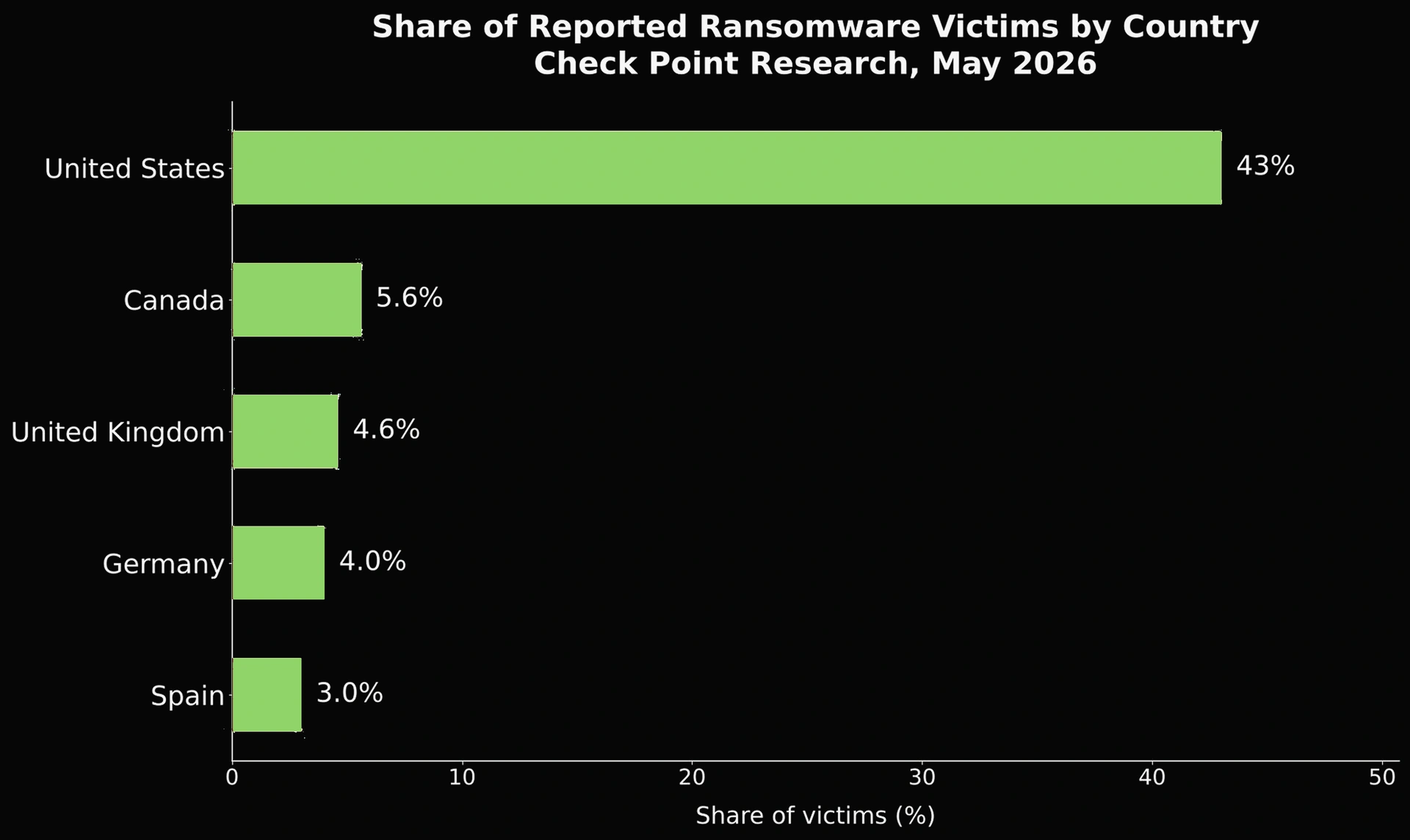
Ransomware attacks represent a distinct and rapidly growing segment of cybercrime, with specific nations bearing the brunt of these financially motivated assaults. In May 2026, Check Point Research indicated a significant concentration of ransomware victims in one country.
The United States accounted for a staggering 43% of all publicly reported ransomware victims. This figure is more than double the combined total of the next four most affected countries. Globally, reported ransomware victims increased by 48% from the previous year, with Asia experiencing the fastest growth at 119%.
Key nations targeted by ransomware include:
- United States: 43% of all publicly reported ransomware victims.
- Canada: Followed at 5.6%.
- United Kingdom: Accounted for 4.6%.
- Germany: Experienced 4.0% of victims.
- Spain: Registered 3.0% of victims.
The United States had more than twice as many ransomware victims as the next four countries combined, highlighting a severe and concentrated threat.
Regional Attack Intensity and African Hotspots
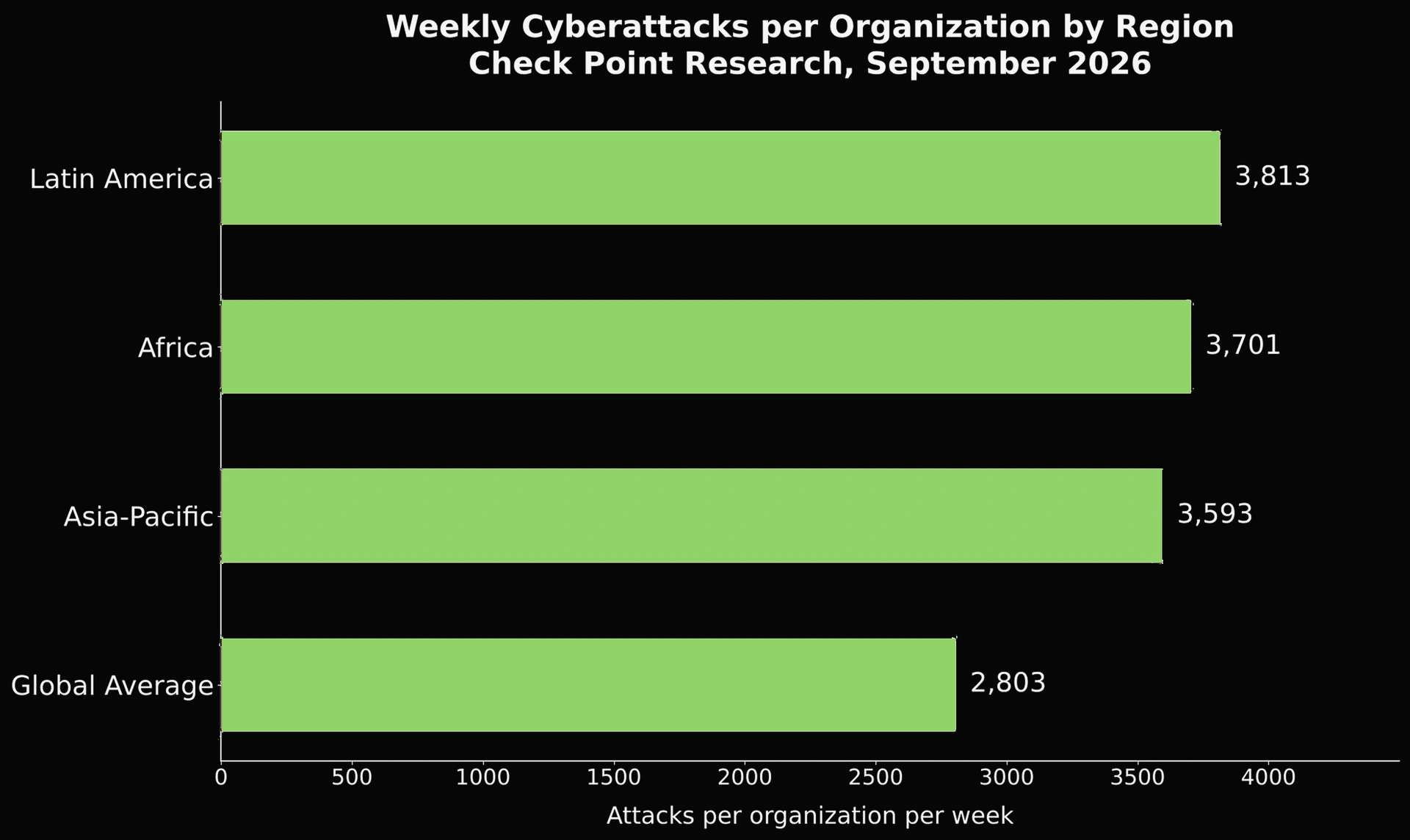
Beyond national shares, the intensity of cyberattacks can be measured by the average number of incidents per organization. This metric reveals that regions outside traditional Western economic centers often face the highest pressure.
In September 2026, organizations in Latin America experienced an average of 3,813 cyberattacks per week, making it the most targeted region. Africa followed closely with 3,701 attacks per week, and Asia-Pacific registered 3,593. The global average stood at 2,803 attacks per organization per week, marking a 48% increase from the previous year.
Growth in attack volumes was significant across continents:
- Europe saw the fastest growth, with attacks up 61% year over year.
- North America experienced a 50% rise in attacks.
The education sector emerged as the most targeted globally, with schools and universities facing an average of 6,656 attacks per week.
Within Africa, specific nations recorded exceptionally high attack volumes in July 2026:
- Angola: Averaged 5,714 cyberattacks per week.
- Nigeria: Followed with 4,975 attacks per week.
- Kenya: Registered 2,915 attacks per week.
- South Africa: Experienced 2,195 attacks per week.
The global average for that month was 2,336 attacks. Organizations in Angola faced more than twice as many attacks as the global norm, with financial services, government, and energy being the most targeted industries across Africa.
Motives, Costs, and Data Breaches
Understanding the motivations behind cyberattacks is crucial for effective defense. Microsoft's 2025 analysis of incidents with known motives reveals that financial gain and data acquisition are the primary drivers.
- More than 52% of attacks were driven by extortion and ransomware.
- In 80% of incidents, attackers aimed to steal data.
Hospitals, schools, and local governments are frequently targeted due to their combination of sensitive data and often limited security resources. This highlights that most cyberattacks are not espionage-driven but rather financially motivated "shakedowns."
When these attacks succeed, the financial repercussions can be substantial, varying significantly by country. IBM's 2025 report on data breach costs illustrates this disparity:
| Region/Country | Average Cost of Data Breach |
|---|---|
| United States | $10.22 million |
| Middle East | $7.29 million |
| Benelux | $6.24 million |
| Canada | $4.84 million |
| United Kingdom | $4.14 million |
The global average cost for a data breach was $4.44 million, marking the first decline in five years. Healthcare remains the most expensive sector for breaches, averaging $7.42 million per incident, a position it has held for 15 consecutive years.
America's Escalating Cybercrime Bill
In the United States, the financial toll of cybercrime continues its upward trajectory. Americans reported over $20.8 billion in internet crime losses to the FBI in 2025, representing a 26% increase from the previous year.
More than 1 million complaints were filed, indicating the widespread nature of these digital offenses. Investment fraud, largely linked to cryptocurrency schemes, emerged as the costliest category, accounting for over $8.6 billion in losses.
Emerging threats also contribute to the rising costs:
- Schemes involving artificial intelligence generated more than 22,000 complaints.
- These AI-driven scams resulted in nearly $900 million in losses.
While AI-driven scams currently represent a smaller portion of the total, they signify a new and rapidly evolving front in the expensive battle against cybercrime.
Key takeaways
- The United States is the most targeted nation for cyberattacks, absorbing 25.5% of all observed incidents in early 2026.
- Ransomware disproportionately affects the US, which accounted for 43% of all publicly reported victims in May 2026.
- Regions like Latin America and Africa face the highest weekly average of cyberattacks per organization, with Angola experiencing more than double the global norm.
- The primary motives for most cyberattacks are financial gain through extortion, ransomware, and data theft, rather than espionage.
- Data breaches carry significant financial costs, with the United States averaging $10.22 million per incident, and healthcare remaining the most expensive sector.
- Overall cybercrime losses in the US reached $20.8 billion in 2025, driven by investment fraud and emerging AI-related scams.
This article provides general information based on publicly available data and should not be construed as legal, financial, or cybersecurity advice. Consult with qualified professionals for specific guidance.
Compare jurisdictions with TERRA AI
Statistics about where people live are only half the decision. If you are building an online business or choosing tax residency deliberately, TERRA AI compares Stacks by tax treatment, regulatory burden, sovereignty, and values — then connects you with licensed attorneys and advisors who execute.
This article is general information only and is not legal or tax advice. Consult a licensed professional in your jurisdiction before acting on residency, incorporation, or tax topics.