 Shadow
Nations Where Small Businesses Carry the Economy
Small and medium businesses are the backbone of economies worldwide, making up 99.7% of all companies in Japan and employing 97% of Indonesia's workforce.
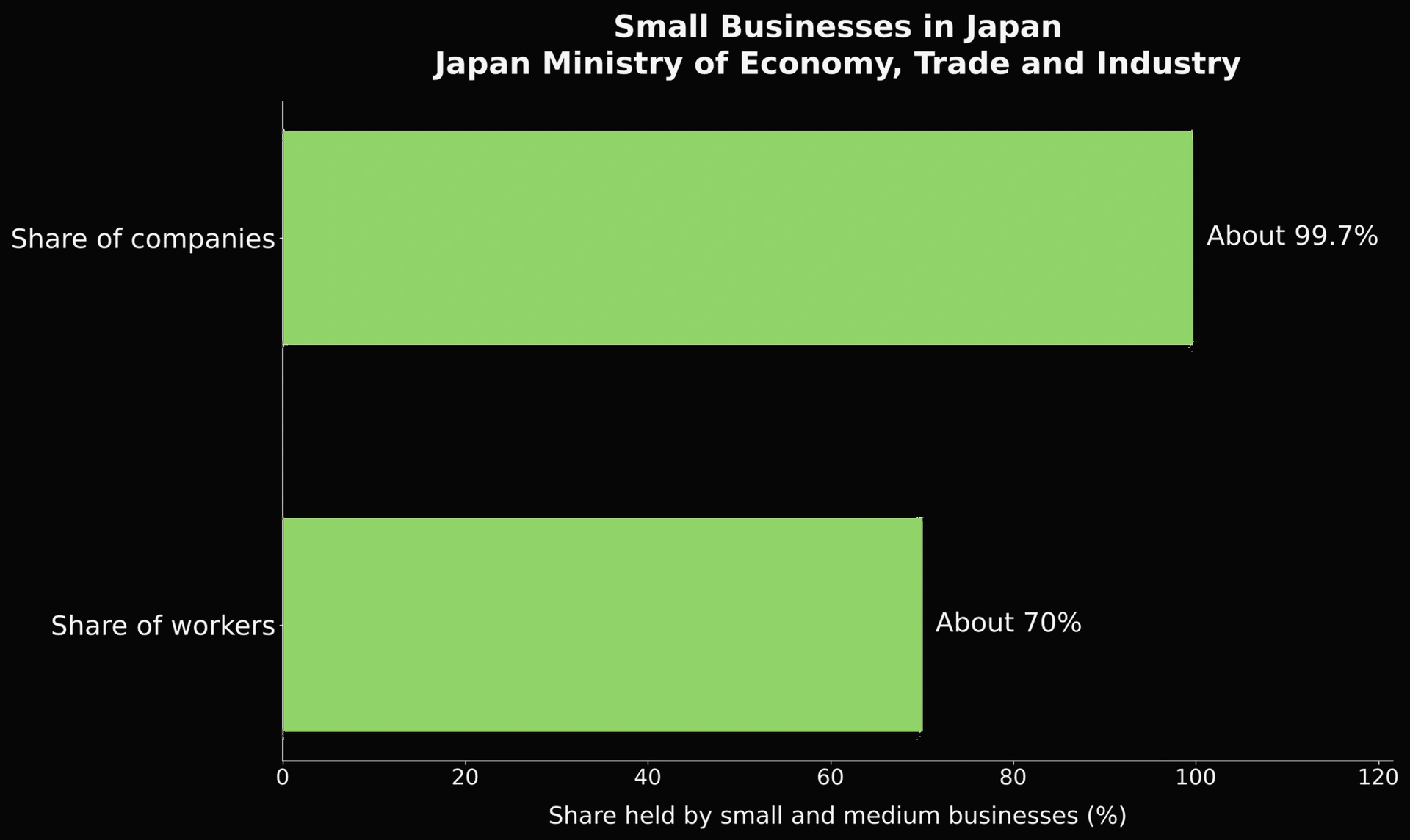
While large corporations often dominate headlines, small and medium-sized businesses (SMBs) are the foundational engine of economies across the globe. In Japan, these smaller firms constitute an overwhelming 99.7% of all companies, underscoring their critical role in national economic structures.
Nations Where Small Businesses Carry the Economy
Across the world, from highly developed nations to emerging markets, small and medium enterprises (SMEs) perform the essential, often unseen, work that sustains local economies. These firms are responsible for the majority of employment, populate commercial districts, and drive daily economic activity far more than their larger counterparts.
The global pattern is consistent: small businesses are the norm, not the exception. The World Bank estimates that approximately 90% of businesses worldwide are small and medium-sized. These entities collectively account for over 50% of global employment, a figure that can rise to 40% of national income in emerging economies. This pervasive influence highlights why understanding the landscape of small businesses is crucial for economic analysis and policy.
Japan: Where Small Firms Are Almost Everything
Japan exemplifies a nation where small firms are deeply integrated into the economic fabric. Small and medium businesses comprise approximately 99.7% of all companies in the country. This near-total dominance in business count translates significantly into employment figures.
These firms employ about 70% of Japan’s workers. This means that for every ten employed individuals, roughly seven work for a small or medium enterprise. The disparity between the percentage of firms and their share of employment indicates that while small firms are ubiquitous, the few large corporations employ a substantial number of people each. For the average Japanese worker, a career is most likely to unfold within a firm far smaller than the globally recognized corporate giants.
- Business Landscape: 99.7% of all companies are small or medium.
- Employment Impact: Approximately 70% of the workforce is employed by SMBs.
- Career Trajectory: Most Japanese careers are spent within smaller firms.
The United States: A Growing Small Business Sector
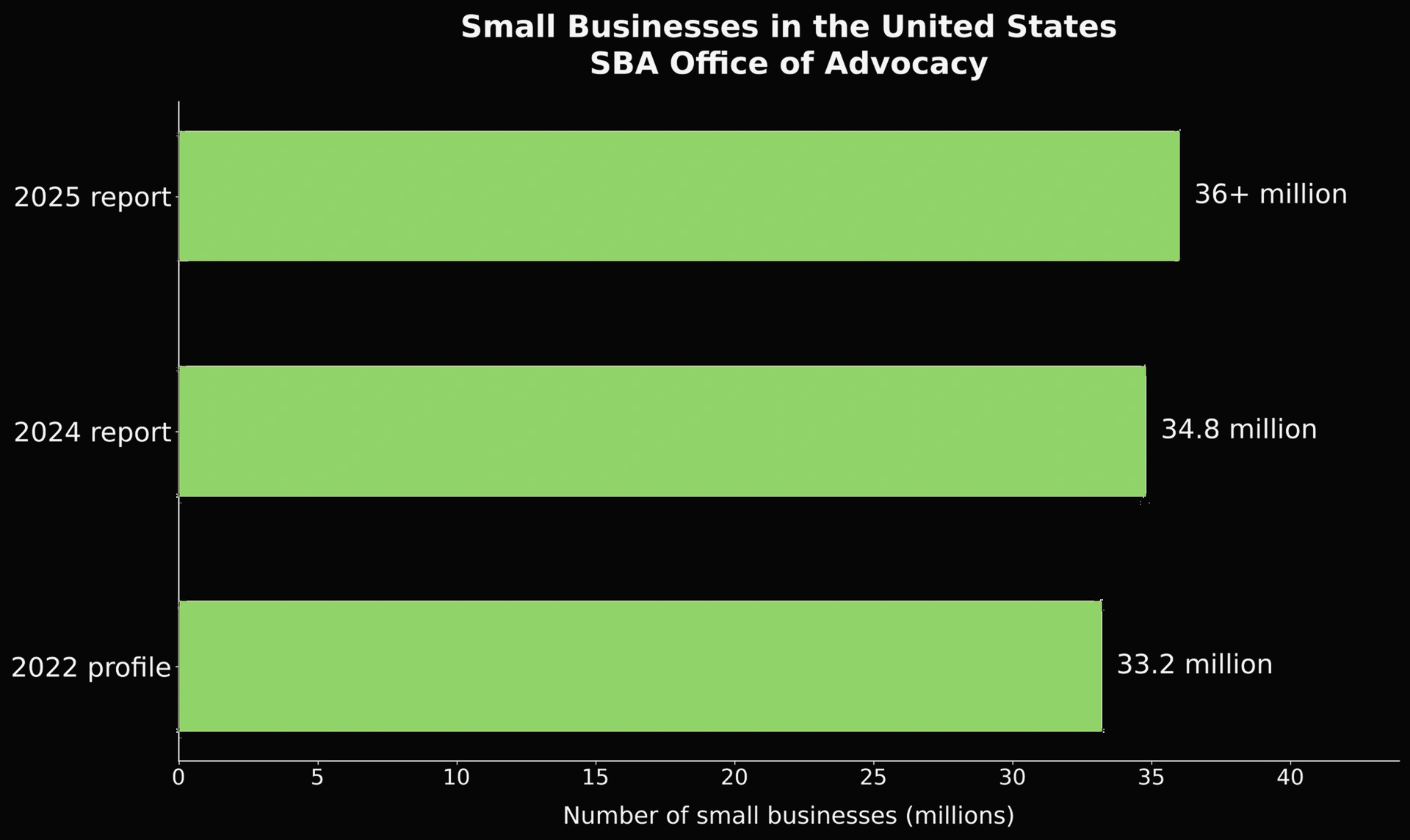
Even the world's largest economy, the United States, relies heavily on its small business sector, which continues to expand. According to the Small Business Administration’s Office of Advocacy, the U.S. now hosts more than 36 million small businesses.
This figure represents a significant increase from previous years, rising from 34.8 million in the prior report and approximately 33.2 million in the 2022 profile. Over roughly three years, the total count of small businesses has climbed by about three million, averaging one million new small businesses annually. These firms are consistently credited with generating millions of net new jobs each year, establishing the sector as a primary driver of employment growth across the country.
- Current Count: Over 36 million small businesses.
- Growth Rate: An increase of approximately 8% since the 2022 profile.
- Job Creation: A major source of net new jobs annually.
Indonesia: Micro and Small Firms Drive Employment
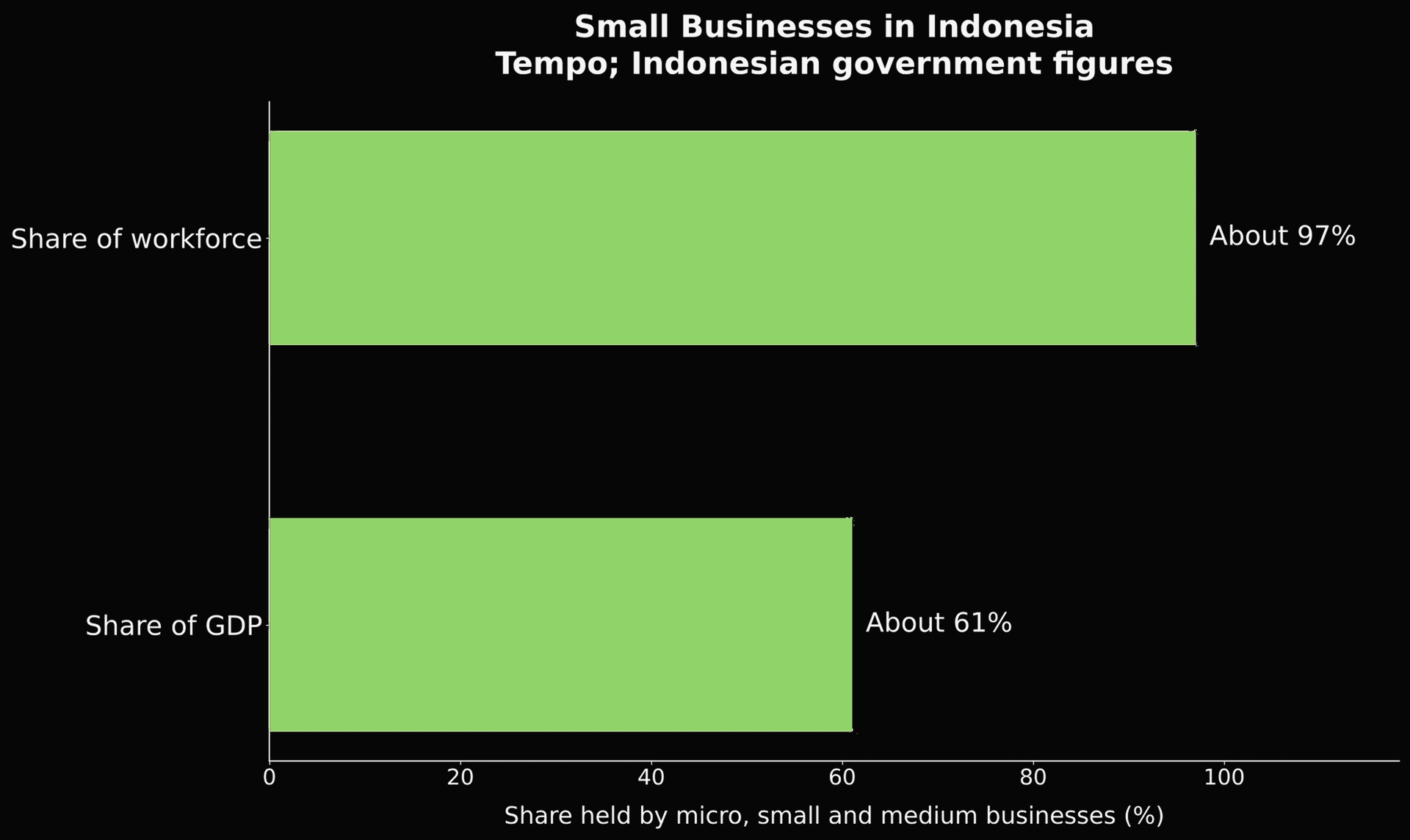
In Southeast Asia, Indonesia demonstrates an even deeper reliance on its micro, small, and medium businesses. These firms employ an estimated 97% of the country’s workforce. This near-universal employment by smaller entities highlights their critical role in the daily lives of most Indonesians.
While employing almost the entire workforce, these businesses contribute about 61% of Indonesia's gross domestic product (GDP). The notable gap between employment share and GDP contribution suggests a vast number of very small operations, many of which may be informal or micro-enterprises. For policymakers, this pattern emphasizes the importance of initiatives aimed at helping the smallest firms formalize, grow, and access capital to improve living standards for a large segment of the population.
India: Small Firms as the Job Engine
India presents a similar narrative on a much larger scale, where micro, small, and medium enterprises (MSMEs) are fundamental to employment. These firms are credited with providing approximately 62% of India’s jobs, according to the McKinsey Global Institute. This makes them a colossal job engine for the nation.
However, their share of the country's gross domestic product is lower, at around 30%, as reported by the government’s MSME ministry. This gap is characteristic of large developing economies: small firms absorb massive numbers of workers, but individual productivity or scale is often lower compared to larger industrial or service companies. For India, the strategic focus is often less on creating new small firms and more on fostering the growth and scaling of existing ones, as even a modest increase in the size of a fraction of these businesses could yield substantial economic benefits.
Europe and Britain: Overwhelmingly Small Business Worlds
Europe has long been recognized as a continent dominated by small and medium enterprises. Across the European Union, these businesses constitute about 99% of all enterprises. They collectively employ roughly two-thirds of the workforce, approximately 65% in round terms. Germany's renowned Mittelstand—family-owned, mid-sized firms that often lead global niche industrial markets—is a prime example of this pattern. Even in countries known for large multinational exporters, these giants often rely on extensive networks of smaller suppliers.
The United Kingdom closely mirrors this European average. Small and medium businesses make up about 99.8% of the private sector business population in Britain. Practically, six in ten British private sector workers are employed by an SMB, despite the UK also hosting some of the world's largest corporations. This demonstrates that a nation can host global financial institutions and retailers while still depending overwhelmingly on its smaller businesses for employment and economic stability. The pattern observed in Japan, Indonesia, India, Europe, and Britain is not an anomaly but the global standard, prevalent in both affluent and developing economies.
Key takeaways
- Small and medium businesses (SMBs) constitute the vast majority of companies globally, estimated at 90% worldwide.
- In Japan, SMBs make up 99.7% of all companies and employ 70% of the workforce.
- The United States has seen its small business count grow to over 36 million, adding approximately one million new firms annually.
- Indonesia's micro and small firms employ 97% of the workforce, contributing 61% to the national GDP.
- India's MSMEs are responsible for 62% of the country's jobs, though their GDP contribution is around 30%.
- Across the European Union and the United Kingdom, SMBs represent 99% or more of all businesses and employ roughly two-thirds of the private sector workforce.
Disclaimer: This article provides general information and statistics based on publicly available data. It is not intended as legal, financial, or tax advice. Always consult with qualified professionals for specific guidance related to business formation, tax residency, or entity structure.
Compare jurisdictions with TERRA AI
Statistics about where people live are only half the decision. If you are building an online business or choosing tax residency deliberately, TERRA AI compares Stacks by tax treatment, regulatory burden, sovereignty, and values — then connects you with licensed attorneys and advisors who execute.
This article is general information only and is not legal or tax advice. Consult a licensed professional in your jurisdiction before acting on residency, incorporation, or tax topics.