 Shadow
 Spirits, Specters, and the Afterlife Around the World
Belief in spirits, specters, and an afterlife remains common globally. In South Africa, 79% believe ancestral spirits can help or harm the living, while Sweden is the most skeptical about an afterlife at 38%.
South Africa leads the world in belief that ancestral spirits can actively influence the living, with 79% of its population affirming this connection. This statistic highlights a global landscape where, despite scientific advancements, belief in the spirit world and an afterlife remains a significant aspect of human experience across many nations.
Global Belief in Spirits and the Afterlife
The human fascination with spirits, specters, and the concept of an afterlife persists across cultures, even as scientific understanding of the world expands. In many societies, the deceased are not merely remembered but are considered active participants in the daily lives of the living.
A comprehensive Pew Research Center survey, spanning 36 countries, explored these beliefs, revealing significant variations in how nations perceive the spirit world and the continuation of existence beyond death.
Ancestral Spirits and Nature's Spiritual Energy
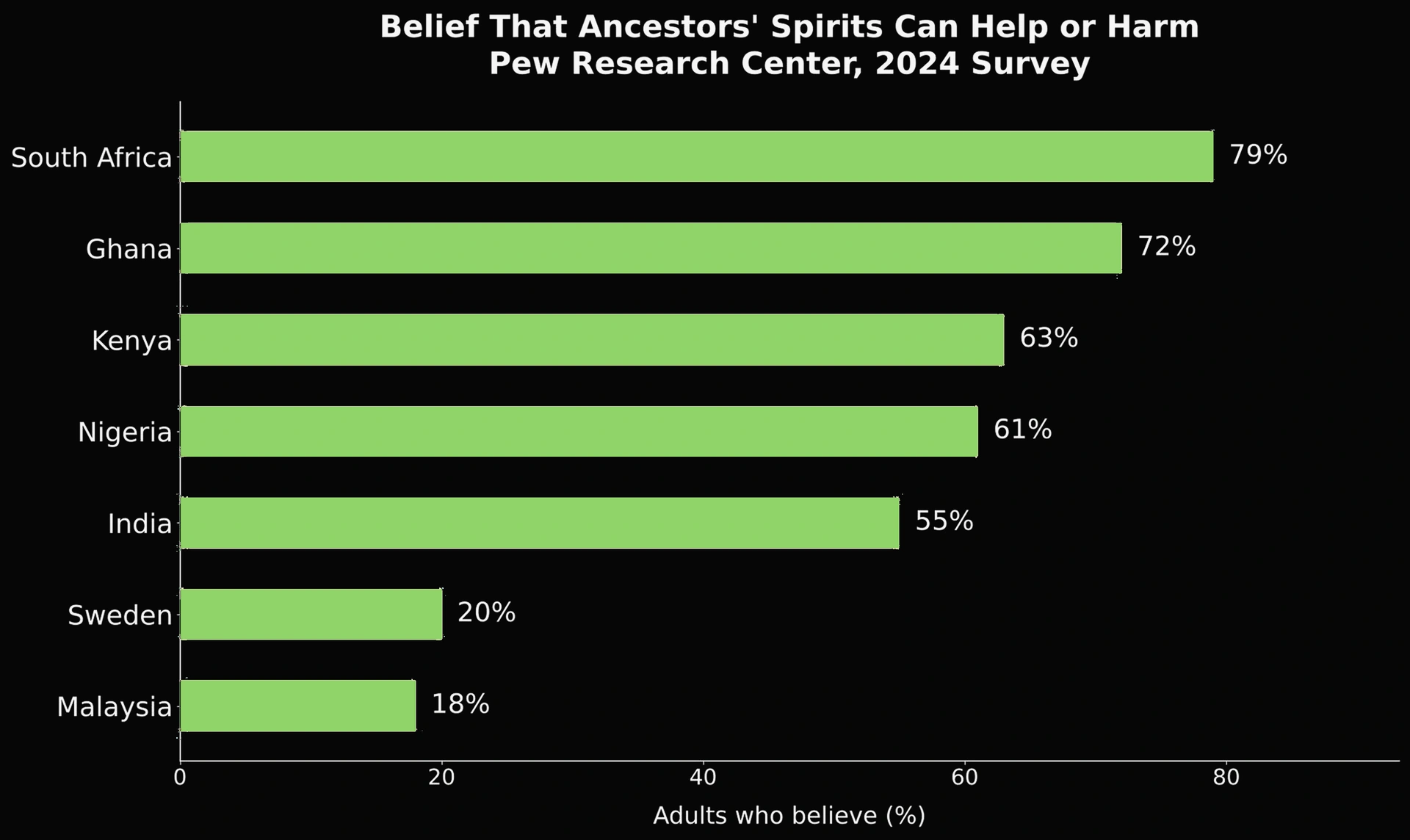
The survey specifically asked whether the spirits of ancestors can help or harm the living. South Africa recorded the highest affirmative response, with 79% of its population agreeing. This strong belief underscores a deep cultural connection to ancestral influence.
Other countries with high rates of belief in active ancestral spirits include:
- Ghana: 72%
- Kenya: 63%
- Nigeria: 61%
Conversely, skepticism was more prevalent in other regions. Only 18% of people in Malaysia agreed, alongside 20% in Sweden and Bangladesh. The median belief across all surveyed countries was 38%, indicating that the idea of ancestral spirits is a significant, though not universal, conviction.
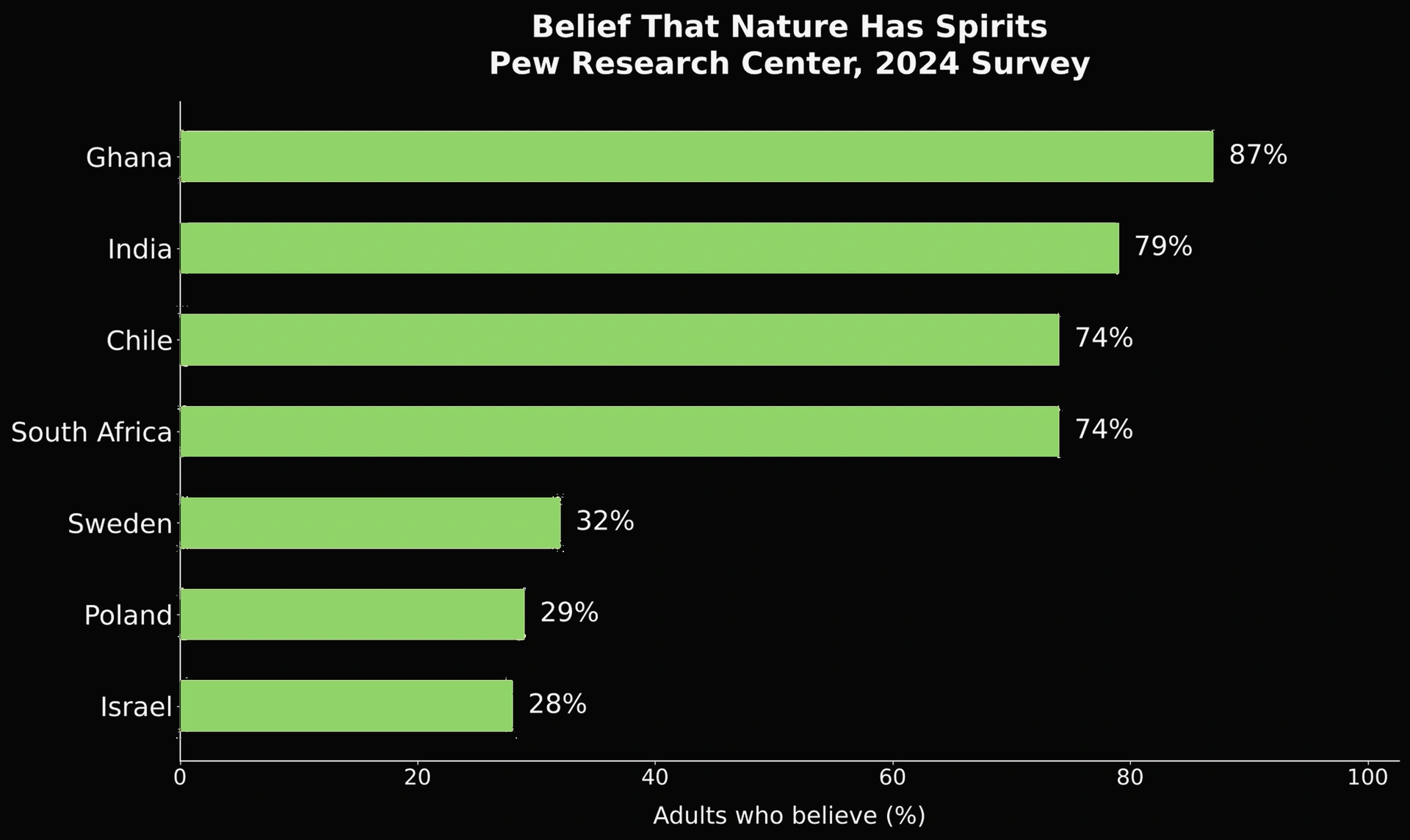
The same survey also investigated whether natural elements—such as mountains, rivers, or trees—can possess spirits or spiritual energies. Ghana again led this category with 87% affirming this belief, followed closely by India at 79%.
Other nations with high belief in nature's spirits include:
- Chile: 74%
- South Africa: 74%
- Philippines: 73%
- Thailand: 73%
At the lower end of this spectrum were Israel (28%), Poland (29%), and Sweden (32%). The median belief across the 35 countries surveyed was 56%, suggesting that the idea of spiritual energy within nature is even more widespread globally than belief in ancestral spirits.
The Global Landscape of Afterlife Belief
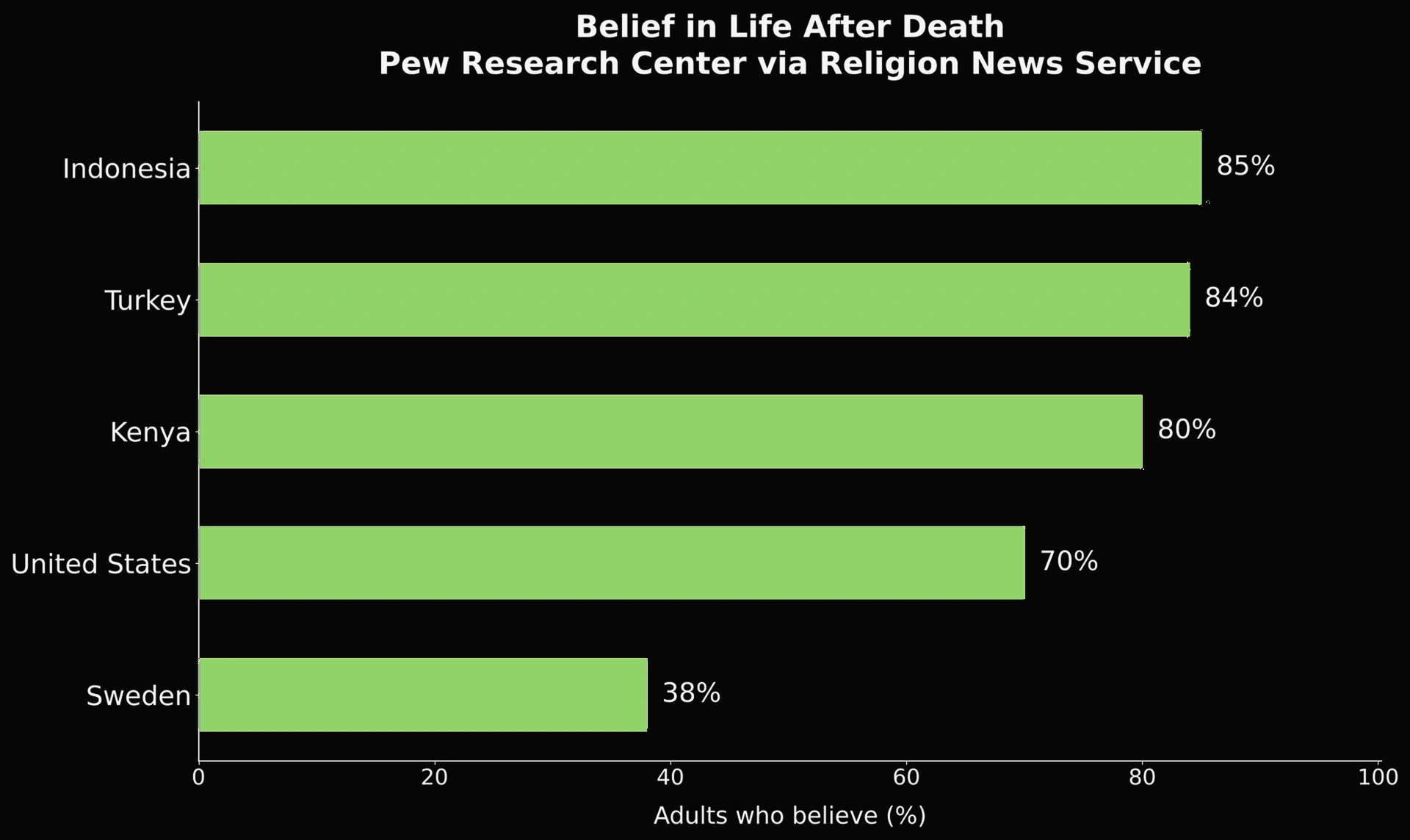
Belief in an afterlife is a pervasive concept worldwide, with a majority of adults in many countries expressing conviction in life after death. Indonesia stands out with 85% of adults stating there definitely or probably is life after death.
Other countries with strong afterlife beliefs include:
- Turkey: 84%
- Kenya: 80%
- United States: 70%
Sweden emerged as the most skeptical nation surveyed, with only 38% of its population believing in an afterlife. Across all countries surveyed, the median belief in life after death was 64%, indicating that nearly two in three people globally anticipate some form of existence beyond physical death.
Paranormal Experiences and Unaffiliated Spirituality
Beyond general beliefs, many individuals report personal encounters with the paranormal. In the United States, a 2025 Gallup survey found that 39% of Americans believe in ghosts. However, this is not the most prevalent paranormal belief; 48% believe in psychic or spiritual healing. Other beliefs include communicating with the dead (27%), reincarnation (24%), and witches (24%). Women tend to be more open to paranormal beliefs than men, at 40% versus 28%.
A YouGov survey from the same year revealed that 60% of Americans have had at least one paranormal experience. The most common experiences reported include:
- Feeling a presence or unknown energy (35%)
- Smelling an unexplained odor (32%)
- Hearing an unexplained sound (31%)
- Hearing the voice of someone who wasn't there (26%)
- Living in a house believed to be haunted (18%)
North of the border, belief in ghosts also varies. According to Ipsos, 46% of Canadians overall believe in ghosts or supernatural beings. Alberta leads with 57%, followed by Atlantic Canada (50%), the Prairies (49%), and Quebec (48%). Ontario (42%) and British Columbia (39%) are the most skeptical. Generation X is the most likely to believe at 55%, compared to just 33% of Baby Boomers. Notably, 13% of Canadians have stayed in a haunted hotel or inn, with 45% of those guests reporting a paranormal experience.
Interestingly, belief in the supernatural is not exclusive to those who identify with organized religion. In Peru, 65% of religiously unaffiliated adults believe in life after death. Similarly, in Brazil, 65% of the religiously unaffiliated believe in something spiritual beyond the natural world. This contrasts sharply with Hungary, where only 19% of the religiously unaffiliated hold a belief in an afterlife, demonstrating that leaving organized religion does not always equate to abandoning the spirit world.
Key takeaways
- South Africa has the highest belief in ancestral spirits influencing the living (79%), while Malaysia, Sweden, and Bangladesh are the most skeptical (18-20%).
- Belief in nature having spirits or spiritual energies is widespread, led by Ghana (87%) and India (79%), with a global median of 56%.
- Indonesia (85%), Turkey (84%), and Kenya (80%) show the strongest belief in an afterlife, while Sweden is the most skeptical at 38%.
- In the United States, 39% believe in ghosts, but 60% report having experienced at least one paranormal event.
- Canadian belief in ghosts is highest in Alberta (57%) and lowest in British Columbia (39%), with Generation X being the most believing demographic.
- A significant portion of religiously unaffiliated adults in countries like Peru and Brazil still hold beliefs in an afterlife or a spiritual world.
Disclaimer: This article provides general information based on survey data and should not be considered legal, financial, or spiritual advice. Beliefs and statistics can vary and are subject to interpretation.
Compare jurisdictions with TERRA AI
Statistics about where people live are only half the decision. If you are building an online business or choosing tax residency deliberately, TERRA AI compares Stacks by tax treatment, regulatory burden, sovereignty, and values — then connects you with licensed attorneys and advisors who execute.
This article is general information only and is not legal or tax advice. Consult a licensed professional in your jurisdiction before acting on residency, incorporation, or tax topics.