 Shadow
 The Countries Without a Single River
Saudi Arabia leads the world in desalination capacity, reaching 16 million cubic meters per day by 2025, a nearly 250% increase since 2016, showcasing global ingenuity in water sourcing.
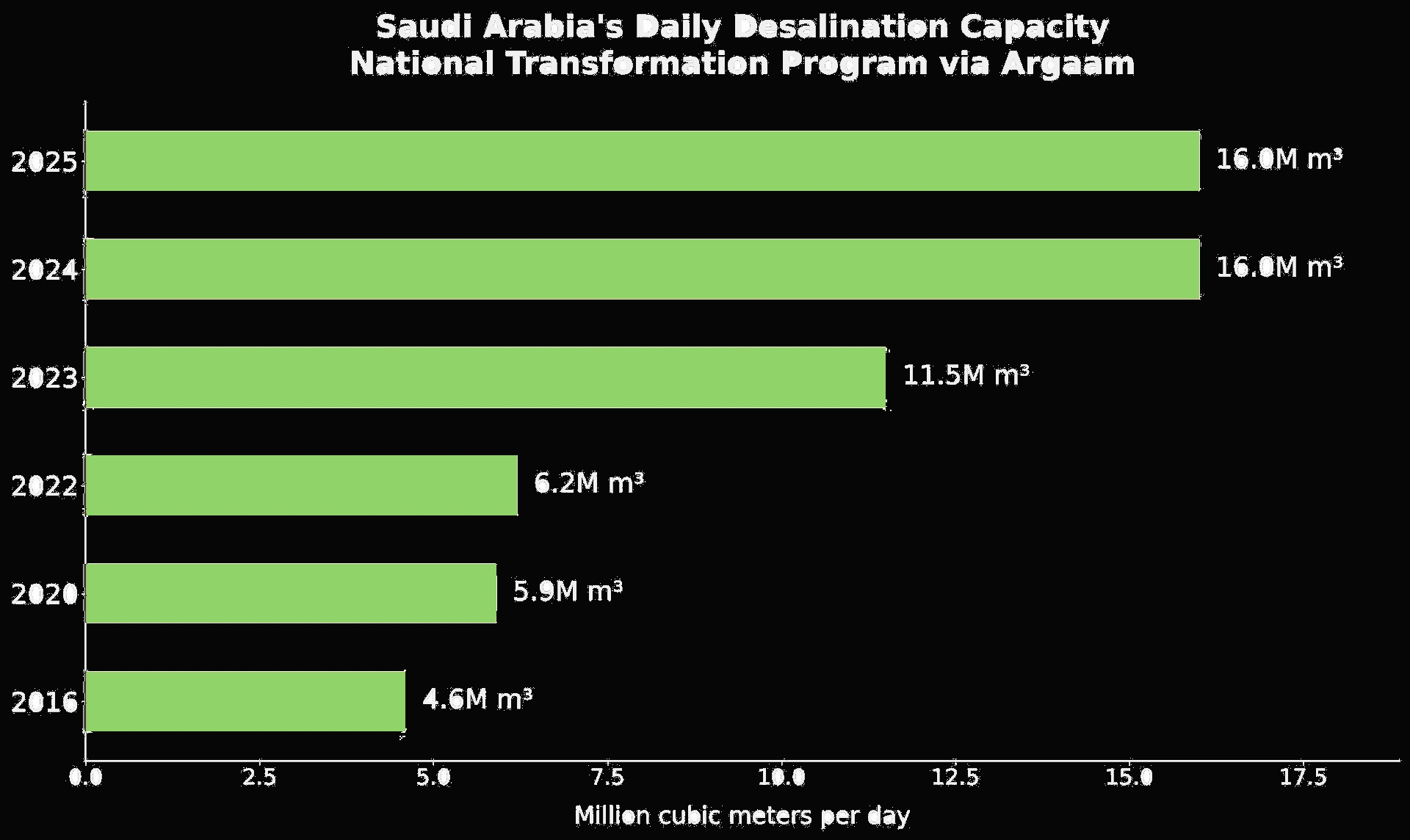
Saudi Arabia has emerged as the global leader in producing fresh water from the sea, with its desalination capacity projected to reach 16 million cubic meters per day by the end of 2025. This remarkable achievement represents a nearly 250% increase in less than a decade, underscoring the critical role of advanced water technology for nations that lack natural rivers.
Desalination Dominance in the Gulf States
The Gulf states have collectively established themselves as the world's foremost region for desalination, producing approximately 40% of the globe's desalinated water. This extensive infrastructure is not just a convenience but a fundamental necessity for their populations and burgeoning economies, particularly in a landscape largely devoid of significant natural rivers.
Saudi Arabia's rapid expansion in desalination capacity highlights this regional reliance. The nation's daily capacity grew from 4.6 million cubic meters in 2016 to 6.2 million cubic meters by 2022. The most significant leap occurred between 2022 and 2024, when daily capacity dramatically jumped to 16 million cubic meters, a level maintained through 2025. This represents an impressive nearly 250% increase over a nine-year period, effectively tripling the amount of fresh water the country can produce from the sea.
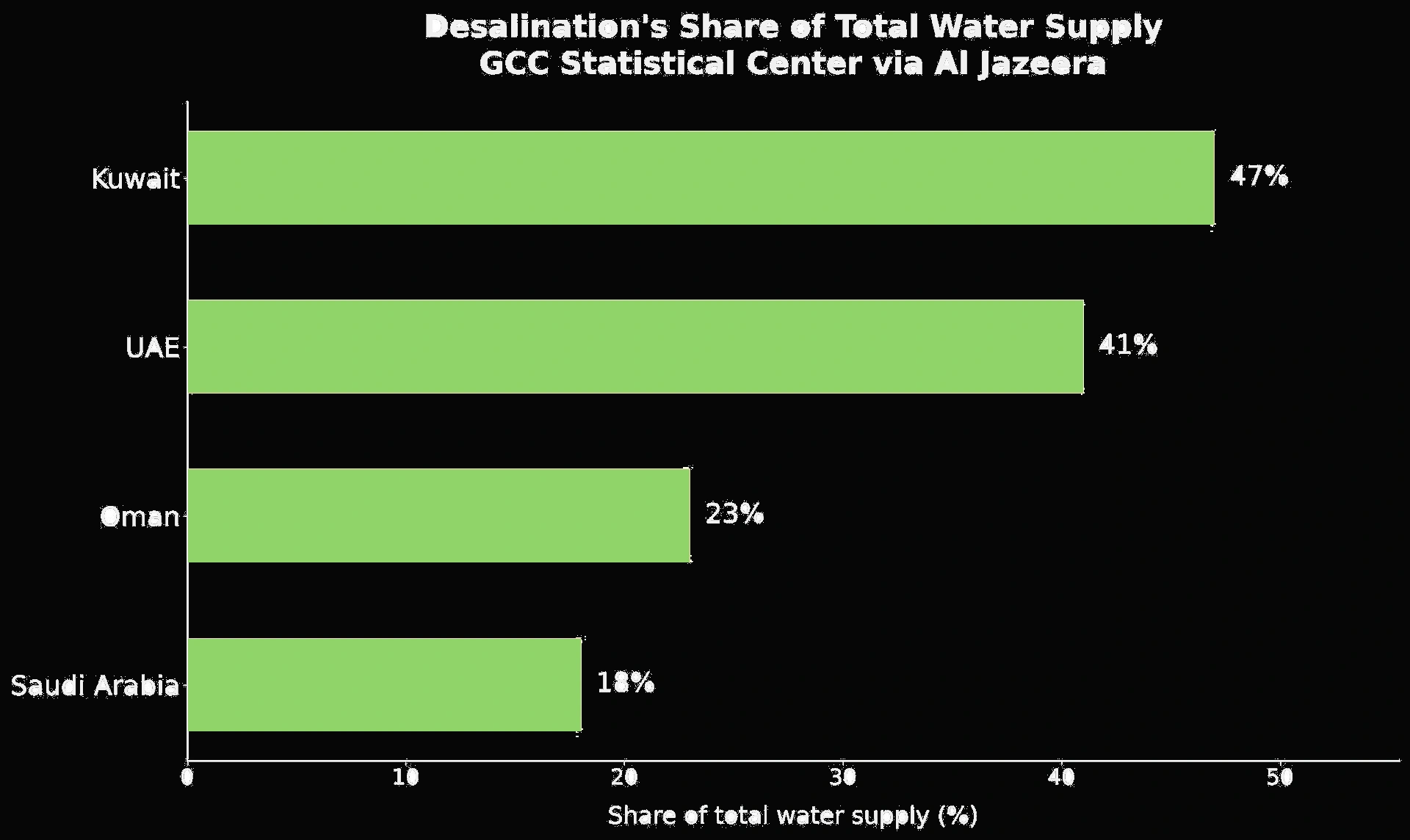
Desalination plants are considered strategic national assets in these countries, supplying a substantial portion of their total water requirements. For instance:
- Kuwait: Desalination supplies 47% of its total water use.
- UAE: Desalination accounts for 41% of its total water use.
- Oman: Desalination provides 23% of its total water use.
- Saudi Arabia: Desalination meets 18% of its total water use.
These facilities are more than mere utilities; they are critical infrastructure, closely monitored and protected, holding strategic importance comparable to that of oil fields, especially in times of regional conflict or instability.
Malta's Blended Water Strategy
Europe's riverless nations have developed their own distinct solutions to address water scarcity. Malta, an island nation situated in the heart of the Mediterranean, exemplifies a sophisticated blended approach, combining advanced desalination techniques with the careful extraction of groundwater from underground aquifers.
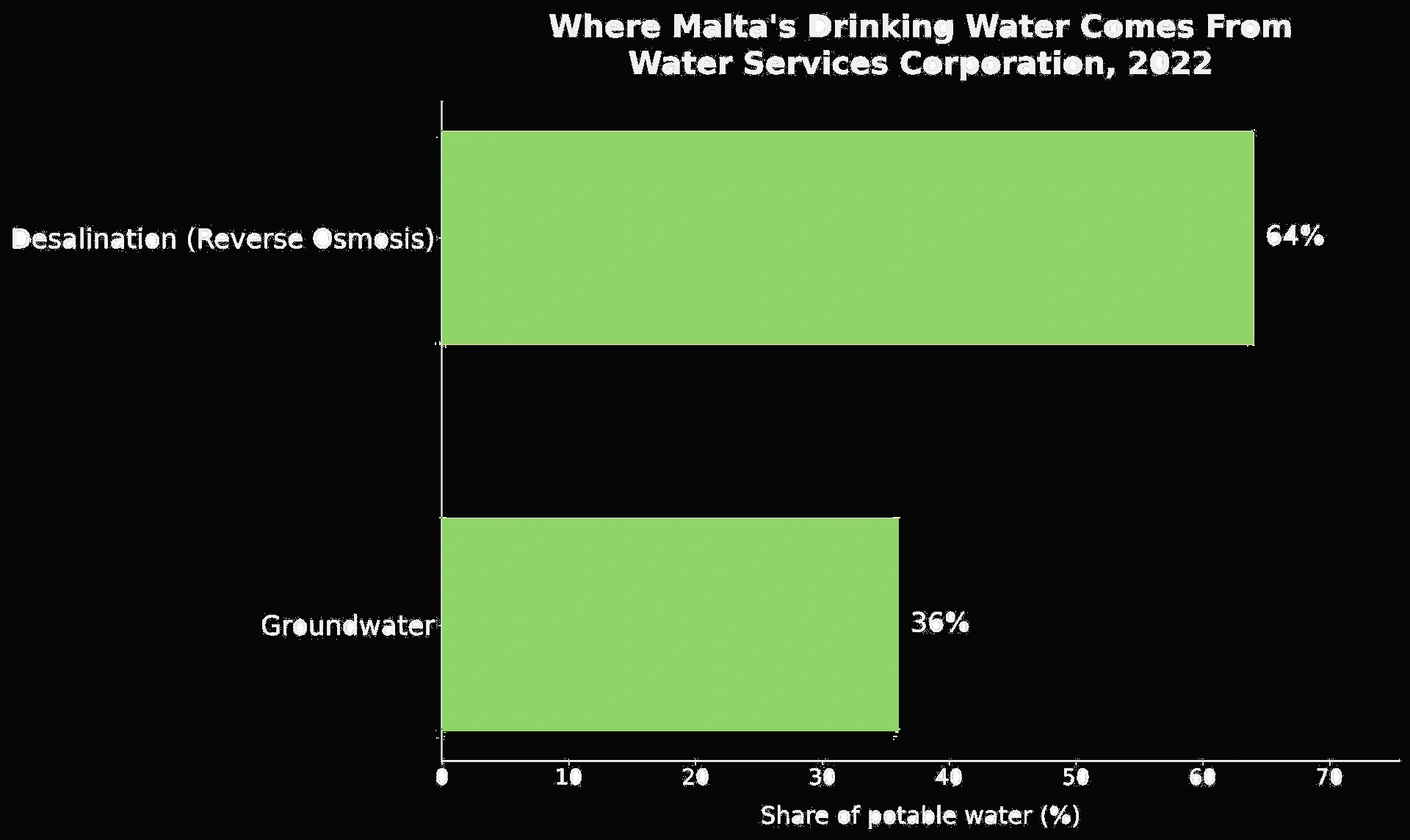
In 2022, Malta successfully produced 35.5 million cubic meters of drinking water to meet its national demand. A significant portion, approximately 64%, was sourced from its reverse-osmosis desalination plants. The remaining 36% was judiciously drawn from its natural underground aquifers, creating a diversified and resilient water supply system. The island's four desalination plants are highly efficient, collectively producing an average of 62,425 cubic meters of water every single day.
Despite these considerable efforts and technological investments, Malta continues to face profound water scarcity challenges. The nation possesses only 95 cubic meters of renewable fresh water per person, a figure that places it among the lowest in the world. This statistic underscores the constant pressure on Malta's water resources and the ongoing necessity for meticulous management and conservation, even with its advanced infrastructure.
Rainfall Reliance in the Pacific Islands
For the riverless nations scattered across the vast Pacific Ocean, rainfall serves as the primary and often sole source of fresh water. This reliance, while seemingly abundant in tropical climates, introduces a unique set of vulnerabilities, as these low-lying atolls are exceptionally susceptible to climatic variations and unpredictable weather patterns.
Majuro, the capital of the Marshall Islands, typically experiences substantial rainfall, receiving more than 3,200 millimeters in an average year—a volume approximately twice that of major cities like Sydney. However, this natural bounty can be highly inconsistent. During the severe 2016 drought, Majuro received a mere 22% of its usual rainfall from January to April, leading to widespread water shortages that affected over 20,000 people across the country.
Similarly, the island nation of Tuvalu faced a critical water crisis during a 2023 drought, which necessitated strict rationing, limiting families to just six buckets of water per day. These instances highlight how quickly a few dry months can transform a seemingly rainy paradise into a dire water emergency, emphasizing the critical need for robust rainwater harvesting, storage, and distribution systems to ensure long-term water security in these vulnerable regions.
Global Adaptations to Riverless Landscapes
The absence of natural rivers presents profound challenges for nations worldwide, yet the ingenuity displayed in securing vital water supplies is remarkable. From the technologically advanced desalination plants of the Arabian Gulf to Malta's strategic blend of desalinated and groundwater, and the Pacific islands' fundamental reliance on rainwater harvesting, each approach is a testament to human adaptation to environmental realities.
These diverse strategies demonstrate that while life without rivers demands significant investment, careful planning, and continuous innovation, it does not preclude the development of thriving societies. However, these solutions also underscore inherent vulnerabilities to factors such as climate change, technological failures, and geopolitical tensions, all of which can disrupt these essential water lifelines. The ongoing quest for water security in riverless regions remains a critical global challenge, pushing the boundaries of engineering and resource management.
Key takeaways
- Saudi Arabia leads the world in desalination, boosting its daily capacity by nearly 250% to 16 million cubic meters by 2025.
- The Gulf states collectively produce 40% of the world's desalinated water, with Kuwait and the UAE relying on it for over 40% of their total water needs.
- Malta sources 64% of its drinking water from desalination and 36% from aquifers, facing severe scarcity with only 95 cubic meters of renewable fresh water per person.
- Pacific island nations like the Marshall Islands and Tuvalu depend heavily on rainfall, making them highly vulnerable to droughts and climate variability.
- Water infrastructure, especially desalination plants, are strategic national assets in riverless countries, crucial for security and public welfare.
Disclaimer: This article provides general information and is not intended as legal, financial, or tax advice. Water resource management involves complex technical, environmental, and policy considerations.
Compare jurisdictions with TERRA AI
Statistics about where people live are only half the decision. If you are building an online business or choosing tax residency deliberately, TERRA AI compares Stacks by tax treatment, regulatory burden, sovereignty, and values — then connects you with licensed attorneys and advisors who execute.
This article is general information only and is not legal or tax advice. Consult a licensed professional in your jurisdiction before acting on residency, incorporation, or tax topics.