 Shadow
 The Great Pet Divide: Global Pet Ownership Trends by Country
The United States leads the world with 89.7 million dogs and 74.2 million cats, but pet preferences vary significantly by country, with Europe favoring cats.
The global landscape of pet ownership reveals a distinct divide between cat and dog preferences across nations. While the United States leads in sheer numbers for both species, with approximately 89.7 million dogs, countries like Brazil boast a higher dog-to-person ratio, and Europe collectively favors cats by a significant margin.
Global Dog Ownership Trends
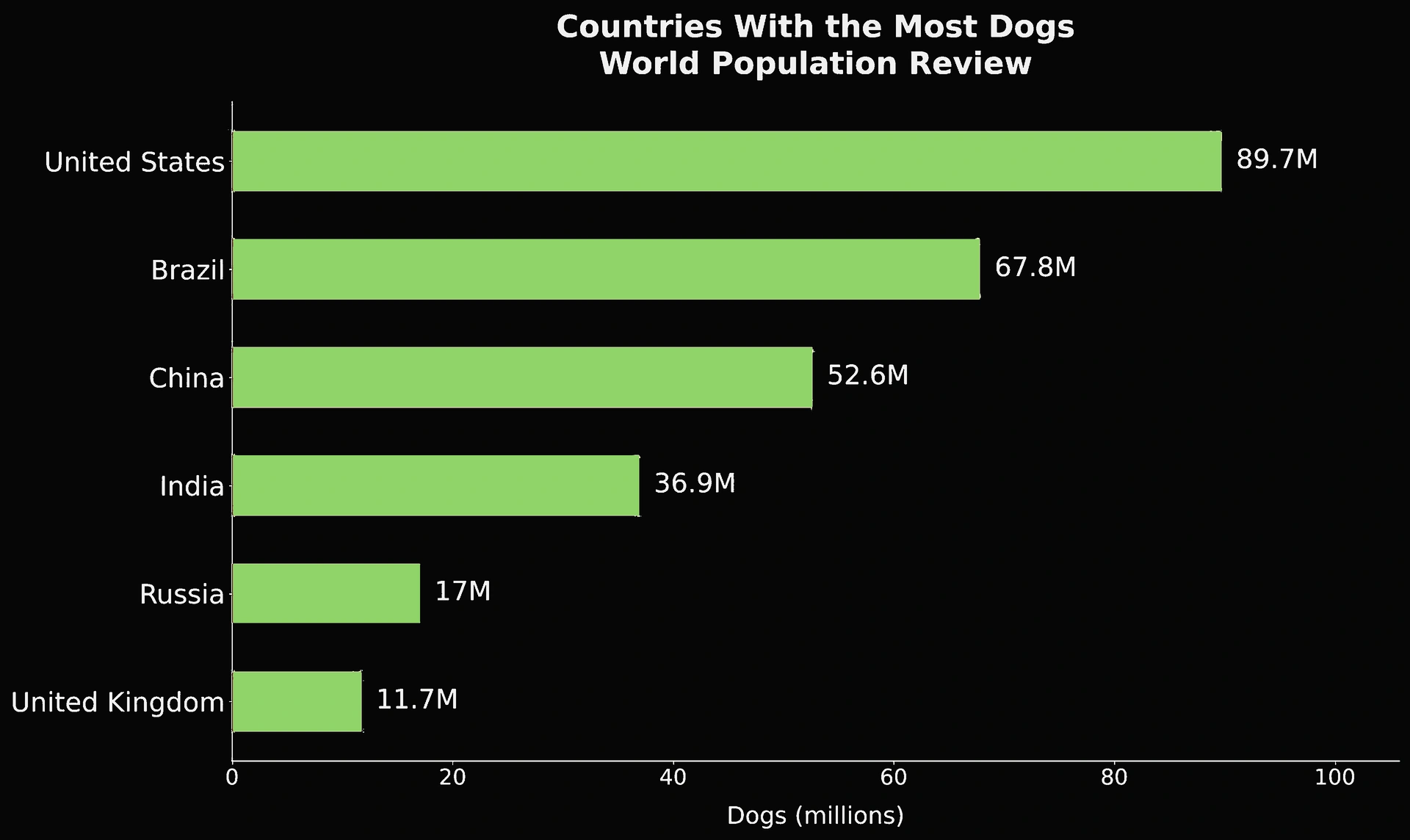
When examining dog populations worldwide, a few nations stand out for their substantial numbers. The United States holds the top position, with an estimated 89.7 million dogs. This figure highlights a widespread affinity for canine companions across American households.
Following the U.S., Brazil ranks second globally, home to 67.8 million dogs. Notably, Brazil also exhibits the highest rate of dogs per person among the listed countries, indicating a deeply ingrained dog-loving culture. China's dog population reaches 52.6 million, while India accounts for 36.9 million dogs.
- United States: 89.7 million dogs
- Brazil: 67.8 million dogs (highest per-person rate)
- China: 52.6 million dogs
- India: 36.9 million dogs
- Russia: 17 million dogs
- United Kingdom: 11.7 million dogs
Global Cat Ownership Trends
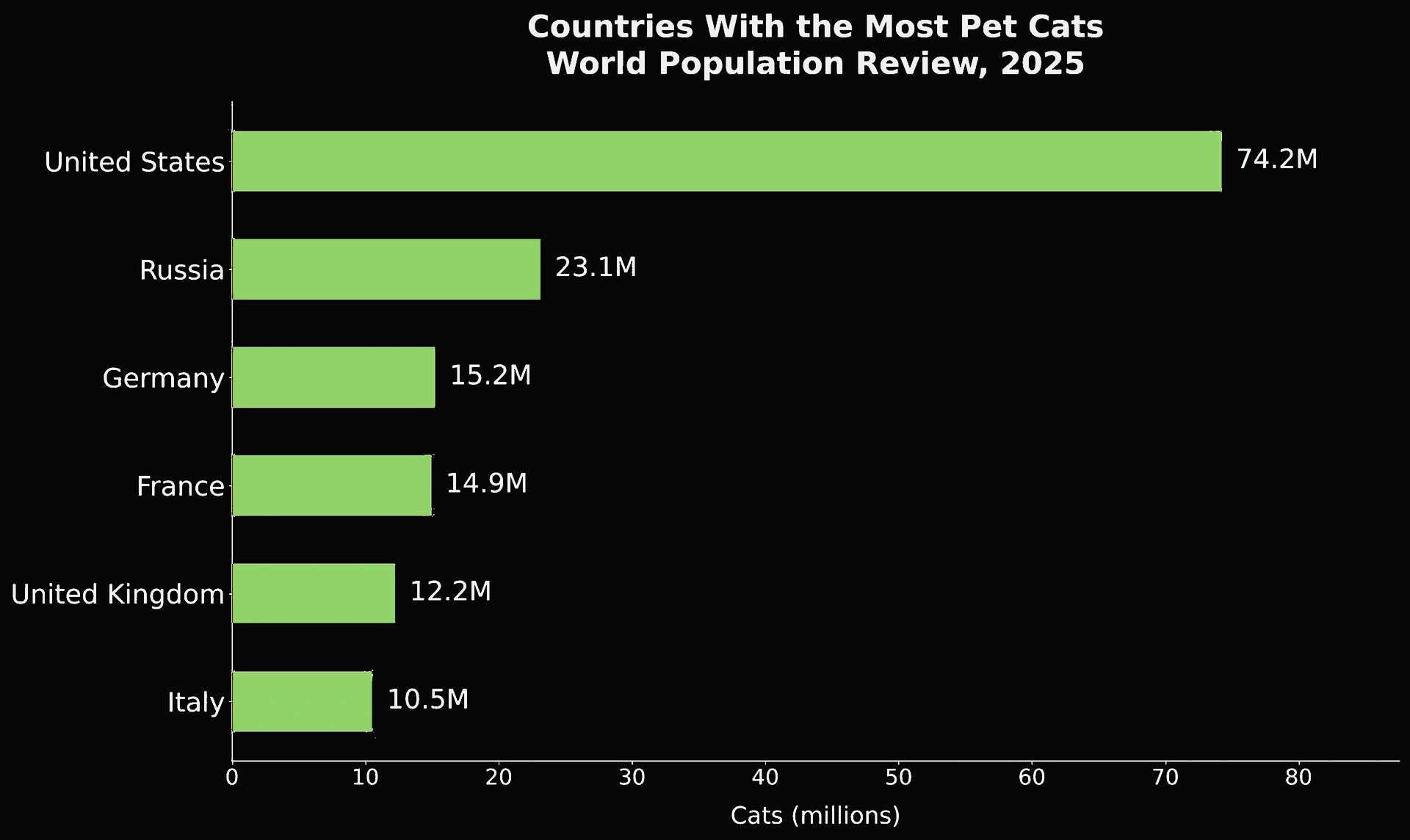
The world's cat populations also show distinct national preferences. The United States leads again, housing approximately 74.2 million pet cats. This positions the U.S. as a major hub for both cat and dog ownership, though the distribution varies.
Russia follows with 23.1 million cats, making it the country with the most cats in Europe. Western European nations like Germany and France also report significant cat populations, with 15.2 million and 14.9 million respectively. On a per-person basis, Montenegro emerges as the most cat-loving country, with 0.32 cats per resident, closely followed by Slovenia at 0.24.
Regional Pet Preferences: Europe, China, and Japan
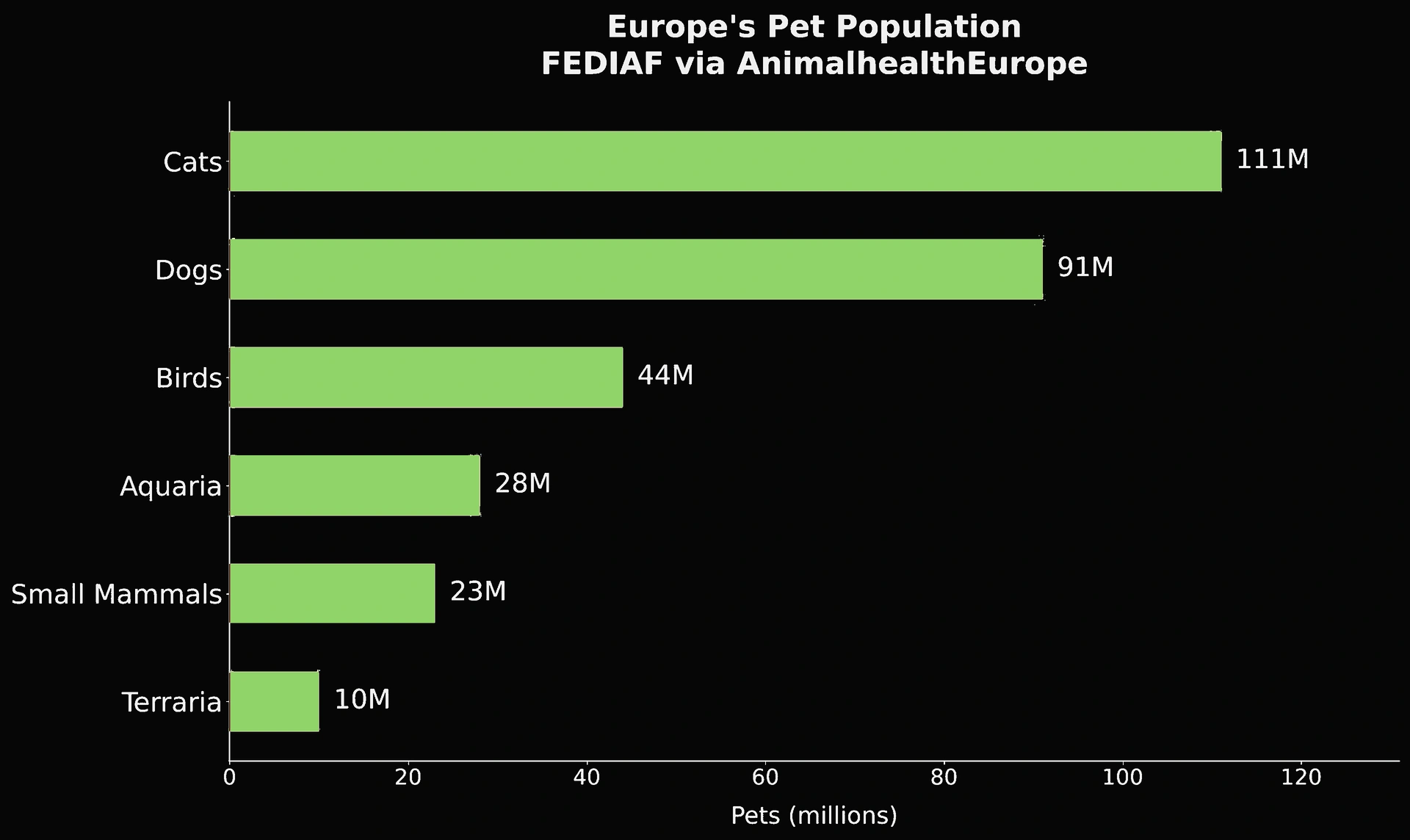
Pet ownership trends reveal significant regional differences, particularly across Europe and in Asian nations like China and Japan. Europe, as a continent, shows a clear preference for cats over dogs. The latest figures indicate that Europe is home to about 111 million pet cats, compared to 91 million dogs.
Beyond cats and dogs, other pets contribute to Europe's diverse animal companionship. Birds account for 44 million pets, aquariums for 28 million, small mammals for 23 million, and terrariums for 10 million. This makes cats the single largest group of pets on the continent.
China has experienced a notable shift in pet preferences. As recently as 2017, dogs were more popular, but by 2024, the country had approximately 72 million pet cats compared to 52 million dogs. Both populations are still growing, with cat numbers increasing by 1.6% and dog numbers by 2.5% between 2023 and 2024.
Japan has long been a cat-centric nation. In 2025, Japanese households kept about 8.85 million cats versus 6.82 million dogs. While dog numbers saw a slight uptick in 2025 after years of decline, cats have consistently outnumbered them, creating a gap of roughly 2 million more cats than dogs over the past decade.
The US Pet Landscape and Country-Specific Ratios
In the United States, while cats are numerous, dogs still lead in household ownership. Approximately 68 million American households owned a dog in 2025, compared to around 49 million households owning a cat. Both categories saw growth, with dog households increasing by about 2.9 million and cat households by 2.5 million, contributing to a total of 94 million U.S. households owning at least one pet.
Comparing cat and dog populations reveals distinct national leanings:
- Switzerland: Favors cats significantly, with about 3.5 cats for every dog (1.9 million cats vs. 544,000 dogs).
- France: Has nearly twice as many cats as dogs.
- Germany: Reports about 1.4 times more cats than dogs.
- Spain: Leans towards dogs, with 9.3 million dogs to 5.9 million cats.
- Argentina: A strong dog country, with 9.2 million dogs to 3 million cats.
- South Africa: Also firmly dog territory, with 7.4 million dogs to 2 million cats.
This data illustrates that while some regions, particularly Northern and Western Europe, show a clear preference for cats, others like Argentina, Spain, and South Africa remain predominantly dog-loving nations. The global pet divide continues to evolve, reflecting cultural nuances and changing lifestyles.
Key takeaways
- The United States leads globally in both dog (89.7 million) and cat (74.2 million) populations.
- Brazil has the highest dog-to-person ratio among the countries analyzed, with 67.8 million dogs.
- Europe is a cat-dominated continent, with 111 million cats compared to 91 million dogs, a gap of 20 million.
- China transitioned from a dog-dominant to a cat-dominant country between 2017 and 2024, now having 72 million cats to 52 million dogs.
- Japan consistently favors cats, with 8.85 million cats versus 6.82 million dogs in 2025.
- Countries like Switzerland, France, and Germany show a strong preference for cats, while Spain, Argentina, and South Africa are predominantly dog nations.
Disclaimer: This article provides general information based on World Population Review data and should not be considered legal, financial, or tax advice. Pet ownership statistics can vary by source and methodology.
Compare jurisdictions with TERRA AI
Statistics about where people live are only half the decision. If you are building an online business or choosing tax residency deliberately, TERRA AI compares Stacks by tax treatment, regulatory burden, sovereignty, and values — then connects you with licensed attorneys and advisors who execute.
This article is general information only and is not legal or tax advice. Consult a licensed professional in your jurisdiction before acting on residency, incorporation, or tax topics.