 Shadow
 The Side Hustle Nations: Who’s Working Two Jobs, and Why
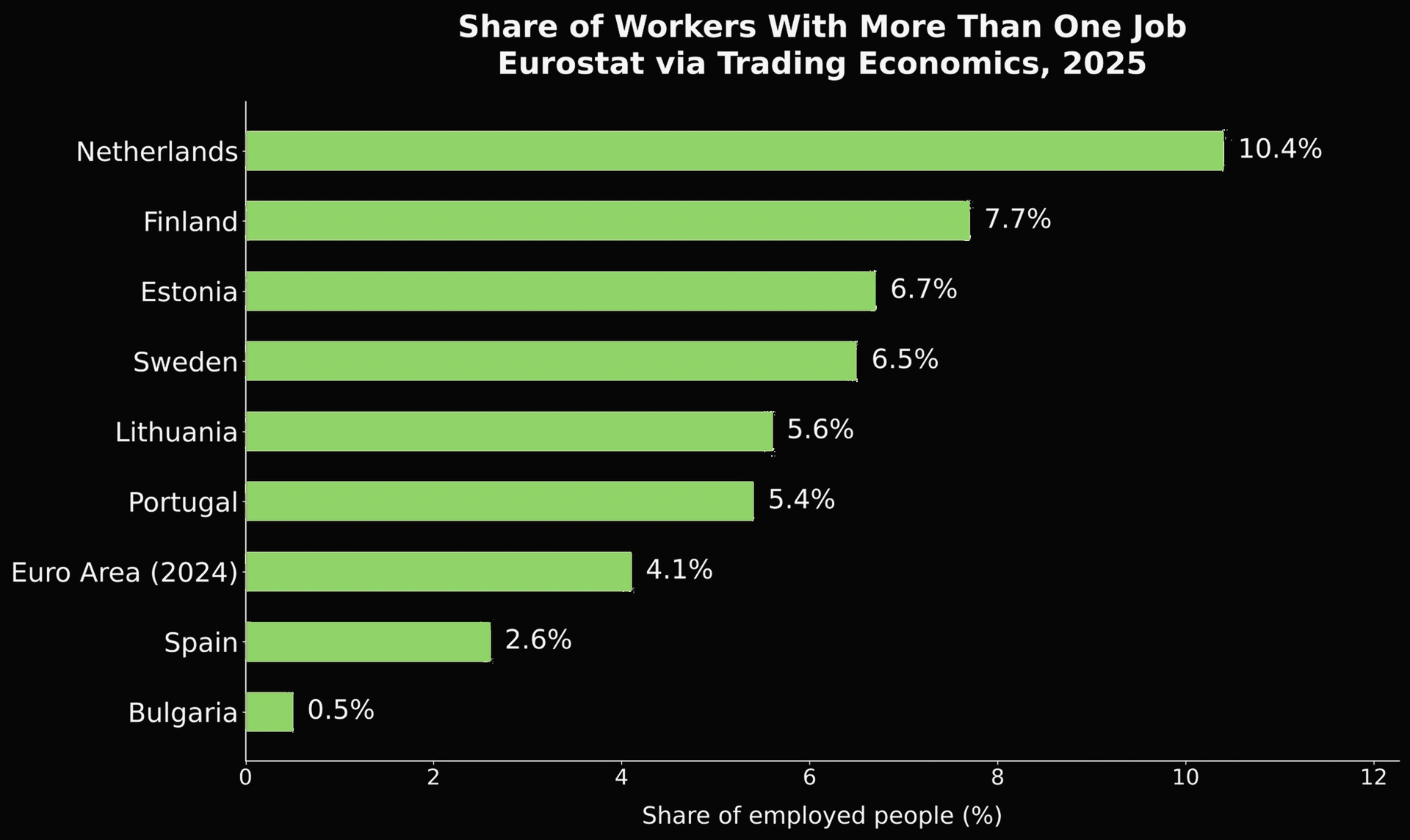
In the Netherlands, 10.4% of workers held more than one job in 2025, leading global trends in side hustles. This phenomenon is growing across many nations.

The Netherlands leads globally with 10.4% of its workforce holding more than one job in 2025, signaling a significant shift in global employment patterns. This trend, often driven by economic necessity or personal choice, is reshaping how individuals approach their careers across various nations.
The Global Rise of Multiple Jobholding
The traditional model of one job, one employer, and one paycheck is increasingly becoming a relic of the past. Across the world, millions of individuals are now supplementing their primary income with additional work, whether through driving services, tutoring, freelancing, or weekend shifts. This shift is driven by a mix of economic necessity and the pursuit of additional income or skills.
Understanding where this trend is most prevalent and who is participating offers insight into evolving labor markets and economic pressures. The data reveals distinct patterns across continents, highlighting both established and emerging side hustle nations.
European Trends in Second Jobs
In Europe, one country stands out for its high rate of multiple jobholding. The Netherlands recorded a significant 10.4% of its workers holding more than one job in 2025, marking a new high for the nation. This figure places the Netherlands well above the euro area average of 4.1%.
Other European countries also show substantial rates of second jobholding:
- Netherlands: 10.4%
- Finland: 7.7%
- Estonia: 6.7%
- Sweden: 6.5%
- Lithuania: 5.6%
- Portugal: 5.4%
In contrast, countries like Spain report a much lower prevalence, with only 2.6% of workers holding a second job. Bulgaria registers an even lower figure at 0.5%, making the Dutch rate more than 20 times higher than Bulgaria's.
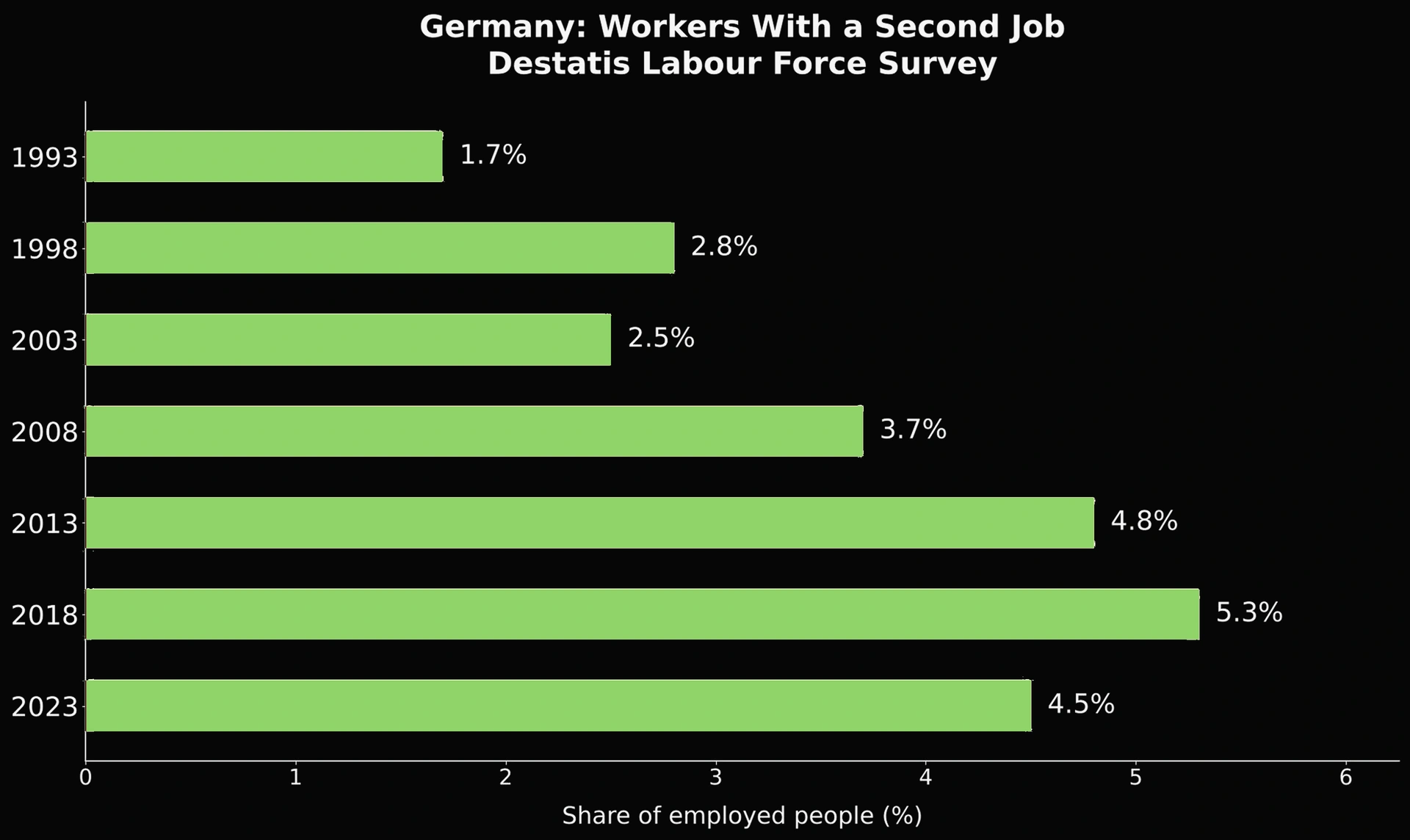
Germany provides a historical perspective on this trend. In 2023, approximately 1.9 million Germans, representing 4.5% of the employed population, held at least one additional job. This is a notable increase from 1.7% in 1993, indicating a steady climb over 25 years, peaking at 5.3% in 2018. Women in Germany are more likely to hold a second job than men, with rates of 5.2% versus 3.9% respectively.
Second Jobs in the UK and Australia
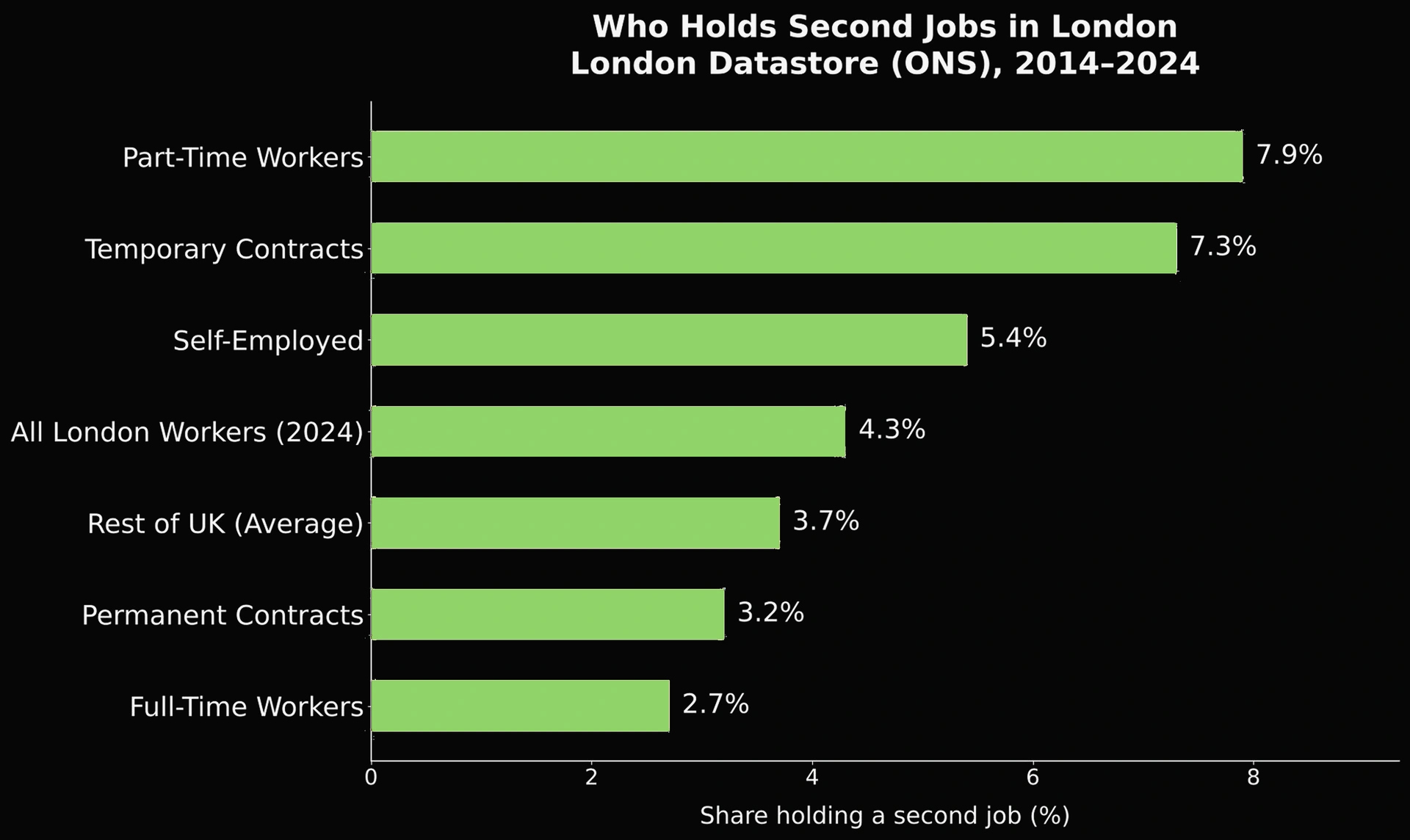
In the United Kingdom, the rise of second jobs has been particularly pronounced in its capital. The number of Londoners with a second job increased from 147,000 in 2014 to 201,000 in 2024, accounting for about 4.3% of the city’s workforce. Across the rest of the UK, this share remained stable at approximately 3.7%, or just under 1 million people.
Certain worker demographics in London are significantly more likely to hold multiple jobs:
- Part-time workers: 7.9%
- Temporary workers: 7.3%
- Self-employed individuals: 5.4%
- Full-time workers: 2.7%
This data suggests a correlation between job security and the propensity to take on additional work, with less secure primary employment often leading to a greater likelihood of a second job.
Australia has also seen a record surge in multiple jobholding. In June 2026, approximately 1,049,100 Australians held more than one job, representing 6.9% of the employed population. This marks a 53% increase from a decade earlier, when the figure stood at 683,800 or 5.6%. The rate has consistently remained at 6.4% or higher since mid-2022.
Demographically, young adults lead this trend in Australia, with 11.2% of workers aged 20 to 24 holding multiple jobs, compared to just 3.1% of those 65 and over. Women (7.7%) are also more likely than men (6.2%) to engage in multiple jobholding.
The Side Hustle in the US and Japan
In the United States, the side hustle has become a defining characteristic for younger generations. According to Bankrate, about 27% of American adults had a side hustle in 2025. Gen Z leads this trend at 34%, followed closely by Millennials at 31%. In contrast, 23% of Gen X and 22% of Baby Boomers reported having a side hustle.
The typical American side hustler earns a median of $200 per month, though the average is higher at $885 due to a segment of high earners. A significant finding is that 29% of side hustlers anticipate needing an additional income stream indefinitely just to meet their financial obligations.
Official US figures from the Federal Reserve Bank of Richmond show the share of American workers holding more than one job fell to 4.1% in April 2020 during the pandemic. It then climbed to 6.0% by the end of 2025 before easing to 5.5% by July 2026. Interestingly, higher earners are more likely to hold multiple jobs, with 5.8% of workers in families earning $150,000 or more compared to 4.9% of those earning under $50,000. About half of America’s multiple jobholders are now college graduates, a rise from roughly 35% in the 1990s.
Japan, traditionally known for its emphasis on lifetime employment, is also slowly embracing the side job. A government survey of nearly 160,000 workers revealed that 9.7% held at least one side job. Certain sectors showed higher rates:
- Agriculture, forestry, and mining: 16.6%
- Education: 15.4%
- Hotels and restaurants: 15.1%
- Manufacturing: 6.0% (lowest)
The primary motivations for Japanese workers were to supplement income (56.5%) and the inability to make ends meet on one salary (39.7%). Freelancers were significantly more likely to hold a side job than regular employees, at 29.8% versus 5.9%.
Key takeaways
- The Netherlands leads globally with 10.4% of its workforce holding multiple jobs in 2025, a record high for the country.
- Side hustles are a growing global phenomenon, with Australia seeing a 53% increase in multiple jobholders over a decade and Germany's rate more than doubling in three decades.
- Younger generations (Gen Z and Millennials) and women are generally more likely to engage in side hustles across various nations.
- Economic necessity is a significant driver, with 29% of US side hustlers expecting to always need an additional income stream.
- Less secure primary employment, such as part-time or temporary work, correlates with a higher likelihood of holding a second job, particularly evident in London.
This article provides general information and statistics for informational purposes only and does not constitute financial, legal, or tax advice. Consult with qualified professionals for personalized guidance.
Compare jurisdictions with TERRA AI
Statistics about where people live are only half the decision. If you are building an online business or choosing tax residency deliberately, TERRA AI compares Stacks by tax treatment, regulatory burden, sovereignty, and values — then connects you with licensed attorneys and advisors who execute.
This article is general information only and is not legal or tax advice. Consult a licensed professional in your jurisdiction before acting on residency, incorporation, or tax topics.